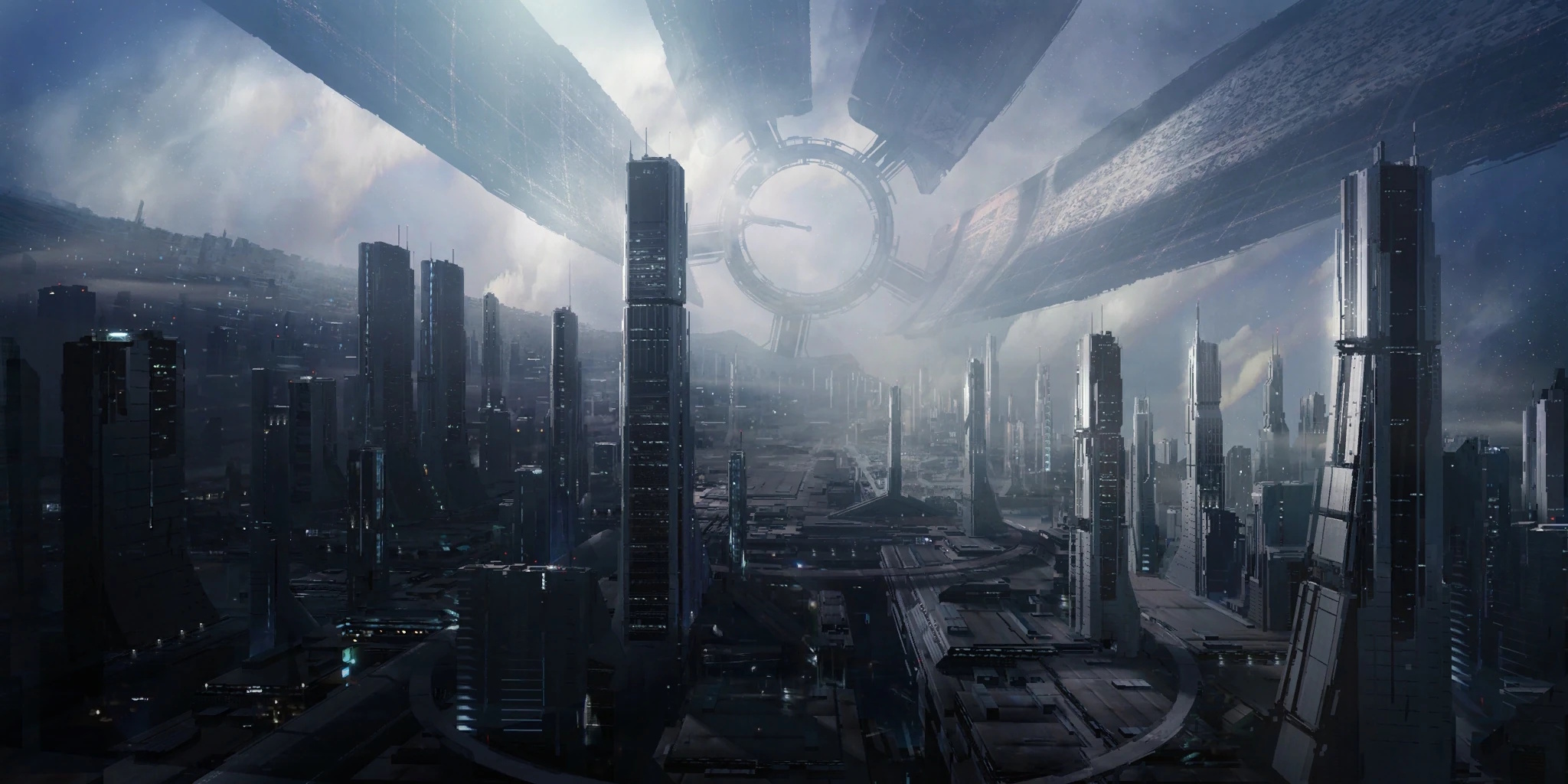
When we launched First Hour in July 2007, BioWare was an independent studio on the verge of releasing Mass Effect on the Xbox 360 in November. By October, Electronic Arts had purchased the company. Nineteen years later and the newly Saudi and Jared Kushner owned Electronic Arts has closed BioWare.
First Hour grew up during BioWare’s peak, where from 2007 to 2012 the studio released the entire Mass Effect trilogy along with two Dragon Age games, plus many more DLCs, mobile titles, and even a Sonic game. We covered basically everything, I was personally obsessed with Mass Effect and used any excuse to write about the series. Let’s look at BioWare’s golden age and how it overlapped with First Hour’s own peak era.
Before Mass Effect, my history with BioWare was limited, I had played Star Wars: Knights of the Old Republic a bit during college, but didn’t complete it until many years later. I had, however, absolutely loved Jade Empire, the studio’s take on eastern mythology and martial arts. Jade Empire absolutely ruled with fun combat and a memorable cast of characters, I still fondly remember the little girl Wild Flower who is inhabited by two battling demons that come out during battles, what an incredible idea.

In late 2007 I borrowed a coworker’s Xbox 360 to play a handful of otherwise inaccessible games, including Assassin’s Creed, Gears of War, Modern Warfare, and Halo 3. The last game was Mass Effect, which I was so hyped for I had already read the prequel novel: Mass Effect: Revelation (which I later reviewed a few years later). My ecstatic first hour review was my first post of 2008, and 40 hours of gaming later I shared my full review.
I loved the game but had a few reservations, especially with the gameplay such as the Mako vehicle driving. Over the next few months and years I replayed the game at least six more times, grabbing every single achievement and trying out every class and difficulty. Mass Effect quickly jumped to my number two game of all-time, right behind Chrono Trigger. I began proselytizing the game in real life, on First Hour, and on Twitter, which I essentially joined at first just to get more Mass Effect news. And as more Mass Effect content was released, I covered it! The second prequel novel: Ascension along with the two downloadable contents BioWare developed for the first game: Bring Down the Sky and Pinnacle Station. I even reviewed the iPhone exclusive spin-off game Mass Effect Galaxy and started a new column called Daddy Issues where I attempted to probe into Mass Effect character backstories through the lens of their parents. Steve shared his favorite screenshots from the game and I wrote the site’s one and only “Last Hour”, where I counted down the game’s fantastic final sixty minutes for April Fool’s Day.

Mass Effect as a series was about to explode though, while a critical hit with great sales, the second game was about to blow the first’s success out of the galaxy. Mass Effect 2 released in January 2010 and I was there on day one with a first hour review. The game’s opening is well known for literally blowing up the first game’s ship and hero so they could be rebuilt in BioWare’s new character creator. It was an audacious choice, and along with the new cast, recruitment mission structure, and final suicide run, would help cement Mass Effect 2 as one of the best games of the century.
I loved it on the Xbox 360, Nate loved it on the PS3, and generally every single critic loved it. Turns out Electronic Arts also really loves money and released a trove of downloadable content, including some controversial “day one DLC” that locked characters and lore behind their Cerberus Network package. Zaeed: The Price of Revenge introduced the insubstantial mercenary Zaeed, Kasumi’s Stolen Memory gave us the shadowy thief, and the Normandy Crash Site brought an emotional conclusion for fans of the first game.

More DLC for Mass Effect 2 rolled in with the skippable Firewalker Pack, a fun big bad AI story in Overlord, and one of the best DLCs ever made: Lair of the Shadow Broker. Liara T’Soni is my favorite Mass Effect character but she was mostly left out of the main Mass Effect 2 story, in Shadow Broker she’s brought back in full force, helping create the Liara legacy she would carry for years to come. A year after the game was released, the final DLC, Arrival, came out to help bridge the gap to the upcoming third game. The series also got its first PlayStation 3 release and with it, an odd but required bit of DLC called Genesis came out to help Sony fans create their ideal Commander Shepard. It’s basically an interactive comic, but BioWare ended up selling it (for actual MS Points, remember those?) on the Xbox 360 too.
Between the second and third game, my second child was born, who we named Shepard. I kind of can’t believe my wife allowed this, but he’s grown into an incredible 15 year old who loves marching band, vehicle simulation games like BeamNG.drive and Flight Simulator, and has almost no idea who his namesake is. That’s okay though, he’s creating his own destiny.

Two more Mass Effect books released in the intervening years with the most generic names ever: Retribution and Redemption. Rumors also began of a Mass Effect movie or TV show in the works, and I cheekily cast it. 16 years later and the rumors still persist, now being put together at Amazon. Mass Effect 3 also had a demo about a month before its release, and of course I reviewed it.
Mass Effect 3 released on March 6, 2012, a mere 26 months after the second game. I managed to get my first hour review of the game out a day early thanks to a leaked PC release, and I was pretty damn enthusiastic about it. I spent weeks writing my full review of the game, and during that time Mass Effect 3’s ending came under intense scrutiny from gamers. I loved the game but had some of my own reservations, though not strong enough to yell at BioWare and demand them to change the ending, which they eventually did with the Extended Cut. Mass Effect 3 also repeated history and put another squadmate behind DLC in From Ashes. The final Mass Effect content I ever reviewed was the Leviathan DLC, it was fine.

Funny enough, my Mass Effect story mostly ends here. By the time BioWare released their final DLC, Citadel, I had gotten all the game’s achievements, mostly stopped writing for First Hour, and was focusing on raising my family. To this day I don’t know how the trilogy really ends. I eventually picked up the fourth game, Mass Effect Andromeda, but fell off immediately after the first hour, an incredible disappointment in my mind. I bought myself and fellow writer Tucker Mass Effect: Legendary Edition, but haven’t gotten around to playing it. I did replay the first game on the Xbox 360 during covid, but didn’t go on. There’s just something about keeping such a beloved object in the past.
And now BioWare is also in the past, with Electronic Arts shuttering it for good. I’m sad, but in a nostalgic, distant manner. The BioWare I loved during the original Mass Effect trilogy was already mostly gone, most of the folks I followed on Twitter and Bluesky on to new and exciting things. But people still lost their jobs. Electronic Arts has been dead to me for years, but I can’t imagine ever bothering with one of their games again; especially now that they’re owned by the Saudi royals and Kushner family. But Mass Effect and the artists behind it will always have a special place in my heart.