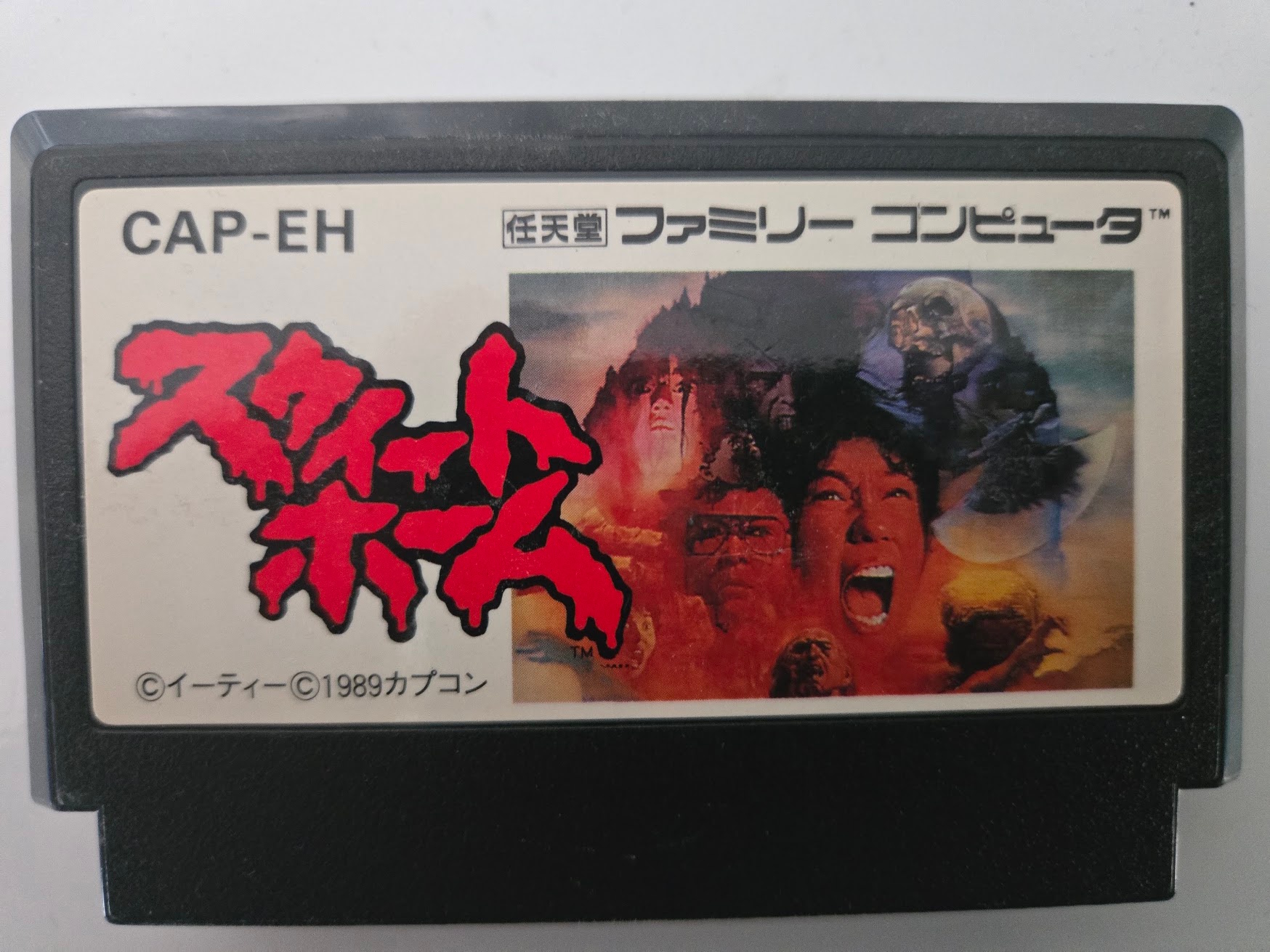
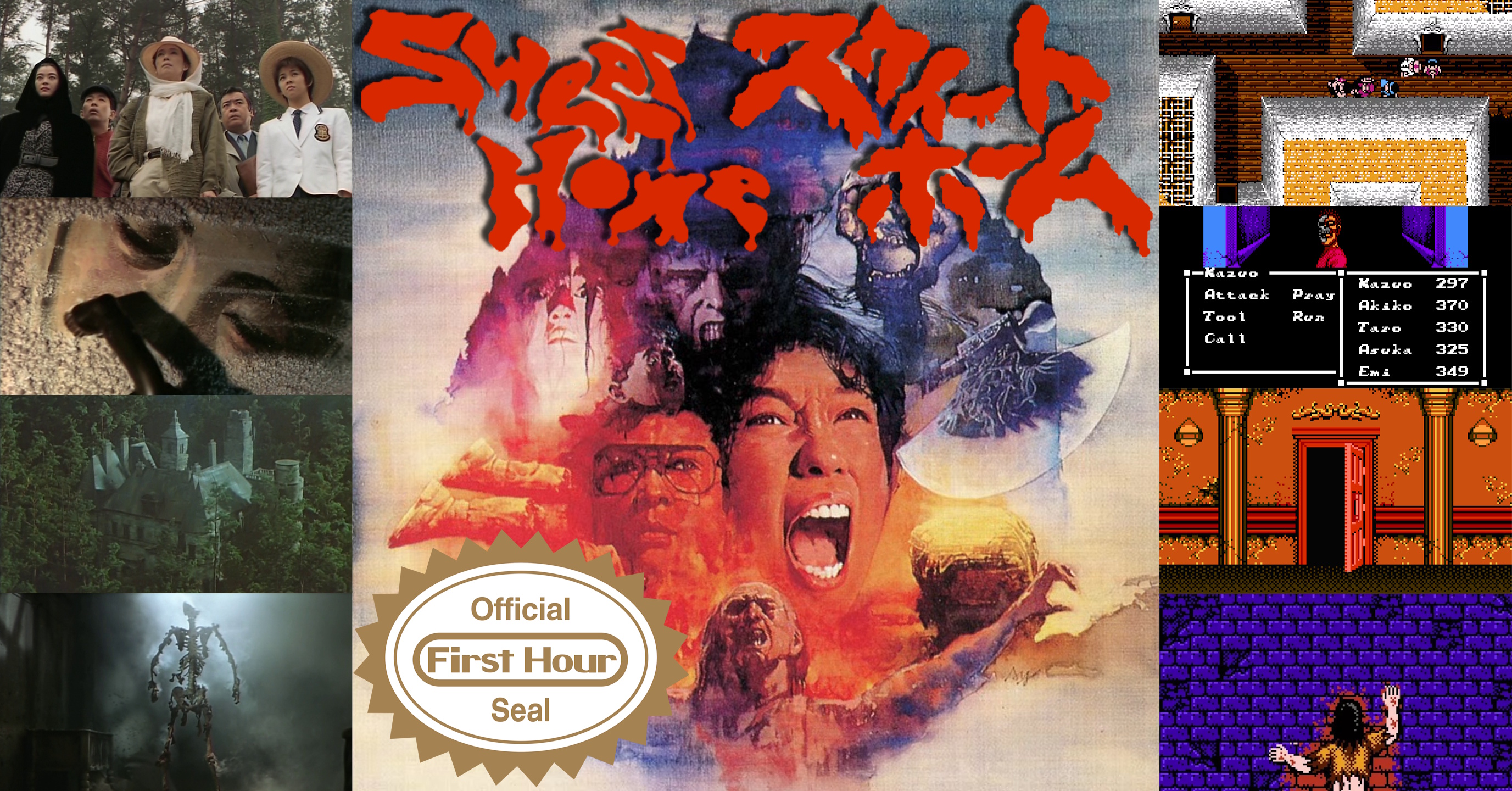
Sweet Home is the best RPG on the NES. Better than its three Final Fantasy titles; it beats all four Dragon Quest games; Ultima, Mother, Swords and Serpents, you name it and I’ve played, and Sweet Home bodies it. Released in 1989 by Capcom, the game has never gotten an official English translation, but thanks to a dedicated cult fanbase, Sweet Home lives on.
Based on the horror movie of the same name, Sweet Home combines RPG and survival horror aspects into a groundbreaking adventure with character permadeath, party splitting, and limited inventories. Unbelievably confident in its design, it’s a shame the progenitor of the entire Resident Evil series is so hard to play.
Let’s take a look at the two Sweet Homes, the game and the movie, both unfortunately exclusive to Japan for almost 40 years.
In 2024 I completed my multi-year journey of playing every single NES game released in North America (and beyond). I booted up 766 games in total, beating 141 of them. As I gathered my thoughts on the huge library I had just waded through, two additional impressions rose to the forefront:
Along with Sweet Home, RPGs on the NES I enjoyed were Faria, Chronicle of the Radia War, and Ghost Lion. It was a time of growing pains for the genre for sure, almost all RPGs on the NES feature random battles, unbalanced gameplay, and halting dialog if it was even translated into English. Emulator features such as save states and fast-forward help make some of these games tolerable to play today, but there’s only so much that can be done. Sweet Home doesn’t need this help, however.
Our team of five characters are creating a documentary on some frescoes found in a haunted mansion. Each character has a special item and can carry just two additional items along with it. Kazuo wields a lighter, Ryo carries the camera, Akiko delivers first aid, Emi has a key, and Asuka runs the vacuum for cleaning the frescoes. As you move through the sprawling building and its grounds, you can split the party up, move the teams independently to solve puzzles, and exchange items between characters. It requires trial and error to move around as you’ll encounter traps and monsters, and some characters are required in certain locations to move on. Yes, Sweet Home even has aspects of a Metroidvania.
As mentioned, permadeath is possible if a character is killed! I reloaded whenever this happened as I was interested in taking the entire party through the whole game, but even in death all is not lost: you can trade items with corpses to keep progressing with the story. It’s honestly fascinating that this was coded as a possibility before it became popularized with the Fire Emblem series, Sweet Home’s tabletop roots are pronounced.
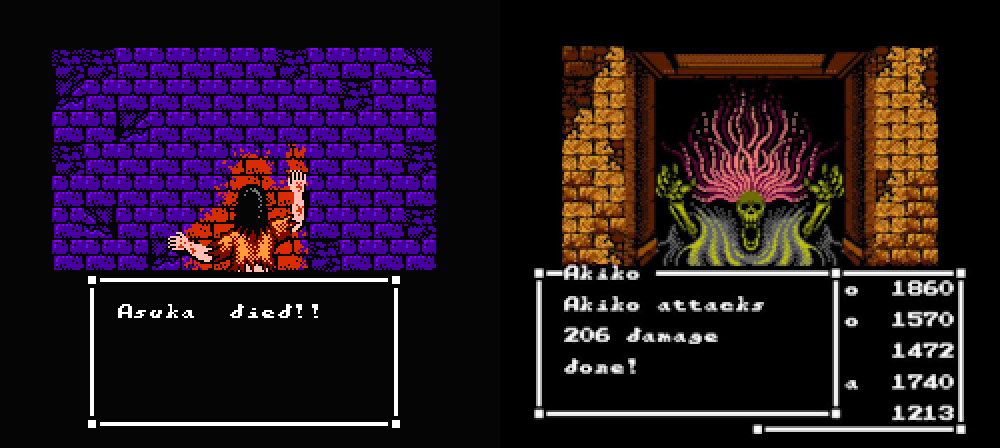
The characters’ limited inventory, traps, and general frightening theme of the game contribute to Sweet Home’s survival horror features. At times it can be frustrating to need to reposition characters or parties to pass items around, but the layout of the mansion makes exploration both fun and spooky. It’s obvious when playing how Resident Evil evolved from this, not just the zombies and locations, but the item management and multiple characters. Playing Sweet Home feels like unlocking a missing link in video game history.
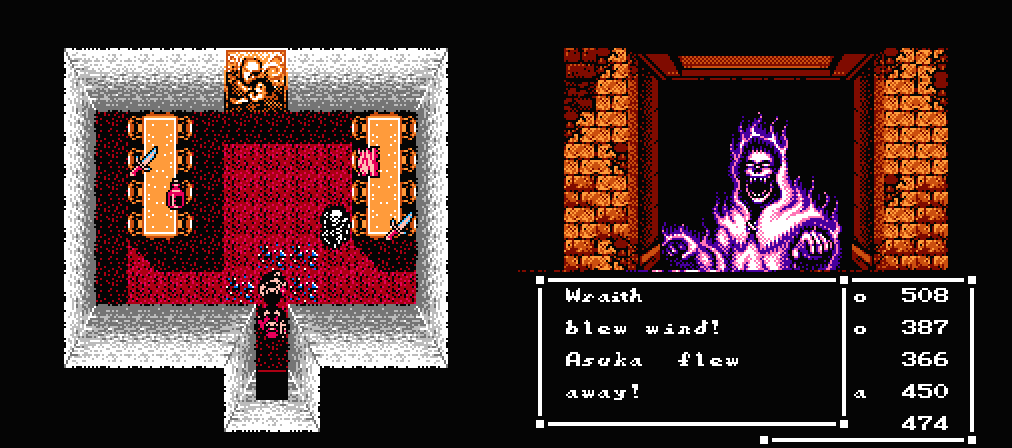
Enemies include genre staples such as zombies and ghosts, but also worms and my favorite: Man. Honestly, what would be scarier than encountering a strange man in a deserted mansion? Forget Man or Bear, how about Man or Zombie? Battles play out similar to Dragon Quest’s with a head on encounter, but with many more options available to you including praying and using any items on hand. You can also call out to a hero in another party and hope they can make it to you on time, it’s a cool system that I would like to see expanded on someday.
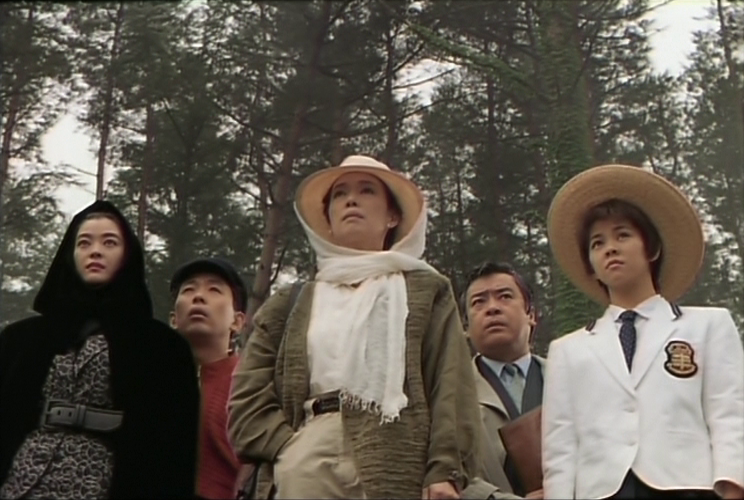
After I played Sweet Home I immediately sought out the film. Directed by Kiyoshi Kurosawa who would go on to direct Cure and Pulse, Sweet Home the movie is similarly hard to track down. The game came out about 10 months after the film released, and they were developed simultaneously so there’s some diverging choices in the narratives, but the core of encountering Lady Mamiya of the mansion remains the same. I had to laugh after watching how closely I ended up modeling my in-game parties after how the characters split up in the film, completely unintentional!
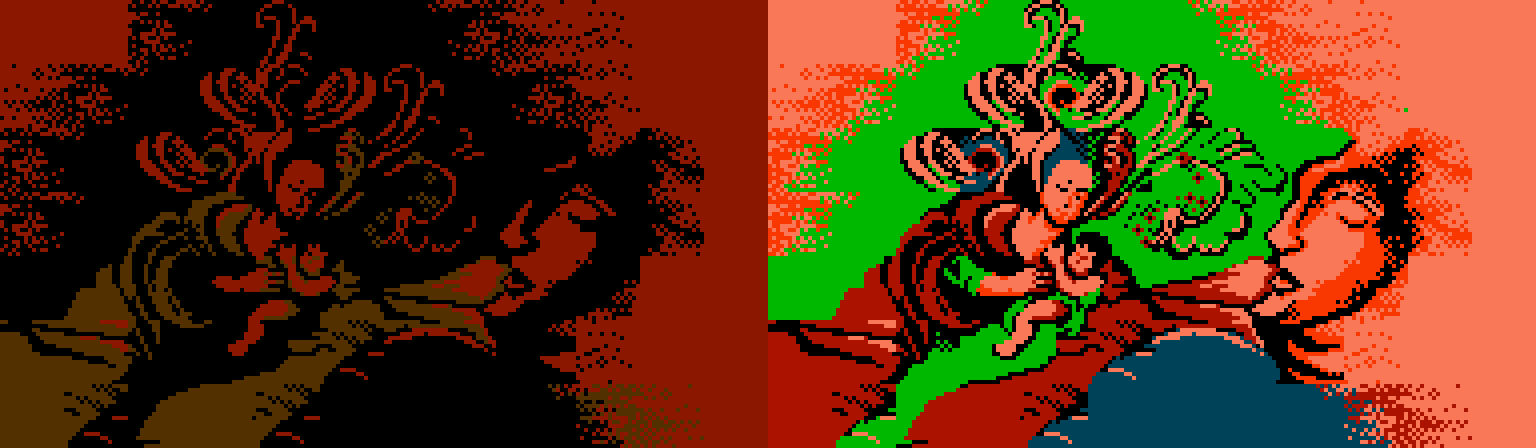
I found the movie almost as successful as the game, the characters are well defined with the highlight being Nobuko Miyamoto who plays Akiko. If you’ve seen Tampopo you’re familiar with her incredible work. There’s some great special effects with Lady Mamiya and two characters’ deaths that had me rewinding trying to figure out how they did it. Extremely gruesome but spectacular to watch! The haunted house film feels different than most modern Japanese horror, but it’s an entertaining watch that bridges the gap between Hausu and Ringu.
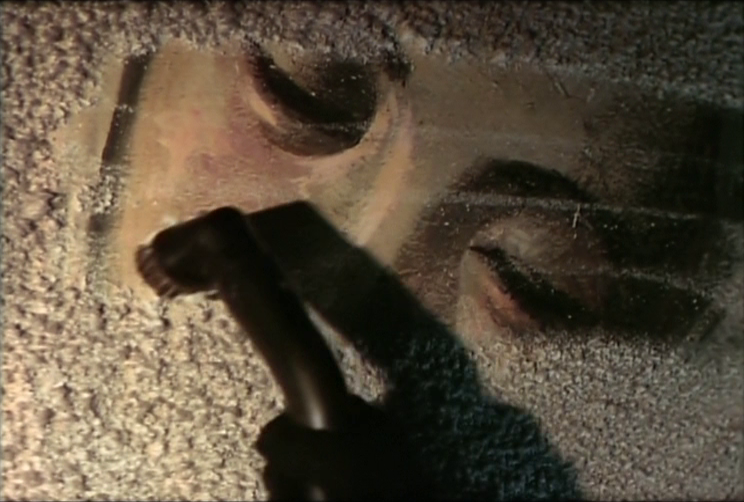
After its theatrical run, producer Juzo Itami (who also appears in the movie, is Miyamoto’s real life husband, and noted as the game’s producer in its credits) re-edited Sweet Home for its home video release. Kurosawa was obviously upset and sued Itami but lost, leading to the original edit also being lost. Right now the only way to watch Sweet Home is from a VHS or laserdisc rip online, definitely not ideal.
Sweet Home the game and Sweet Home the movie aren’t super difficult to find, but their horror elements and fan translation/subtitles do put up a small barrier. Ten years ago I probably wouldn’t have been interested in either, but now they both rank high for me on my list of favorite JRPGs and horror movies. I would absolutely love to see official localizations for both, especially Kurosawa’s original film cut. If you are into genre horror, Resident Evil, or RPG history, I highly recommend tracking both the film and game down to get a glimpse at a pair of underrated but important works.
The Famicom cartridge of Sweet Home is now one of my prized possessions.