May 16, 2012 by Greg Noe
 There's something fun about playing catchup on a console like the PlayStation 3. I already know what most gamers think are the best games, and I can pick and choose from the rest that appeal to me. The games are cheap, the library huge, and the experiences brand new.
So here I am with Infamous (also known as inFAMOUS, but that's just awful), Developed by Sucker Punch Productions and released in mid 2009 on just the PlayStation 3. It didn't leave much of an impression with me at the time except that it was going head to head with a game called Prototype, which from afar seemed like a relatively similar gaming experience. Both games were successful in their own right, Infamous 2 landed last year which Nate reviewed, and Prototype 2 shipped last month.
Infamous is my fourth PS3 catchup game this year, following Batman: Arkham City, Heavy Rain, and Uncharted: Drake's Fortune. I've enjoyed them all, and am currently very fond of the PS3 experience. Of course, I'm limiting myself so far to games I know are pretty great, so I may be biased. Here's my first hour review of Infamous.
Read moreMay 14, 2012 by Nate
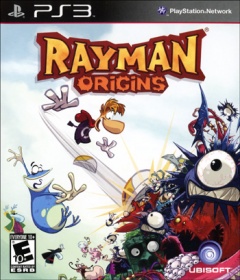 I never quite bought into the whole Achievements deal this generation. It's nice to have a (rather arbitrary) tally of "gamerness" on record, and I do like to occasionally check my friends' progress. But the achievements themselves tend to make a goal out of lengthy tedium, a checklist asking the player to kill X enemies using Y weapon, in a way that mimics the worst parts of grind-dependent MMOs. It's far from the creative metagame that I'd hoped would evolve through the generation.
As a result, my PSN trophy list accounted for 65 games long but lacked a platinum trophy. I had ambitions to 100% my very first PS3 game, Uncharted 2, until I saw that the majority of the trophies were based on finding "treasures" in the game, essentially an overgrown pixel hunt. I don't regret giving up that chase shortly after it began, and it kind of soured me on trophies in general. Still, there has always been this nagging feeling that, having played so many PS3 games, I should get one platinum trophy before the next generation arrives. Some people aspire to run one marathon in their lives. I figured I should have one pointless digital knickknack.
Now I have one. It's a bit underwhelming, actually. Maybe that's because it only took about fifteen hours of game time to achieve. Or maybe it's because Rayman Origins is fun enough that, even if the game lacked trophies, I would have finished all the requirements anyway.
Read moreMay 11, 2012 by Greg Noe
 Both Microsoft and Sony have tested the waters on not allowing used games on their next generation consoles. Whether it’s right or not, Gamestop has been blamed by developers and publishers for ruining the industry with their aggressive used game sales tactics, and as a potential preventive measure, used games may soon be a thing of the past.
And I say, let them do it! Pick the nuclear option! Block used games from running on your console. I don’t say this as a former THQ executive trying to protect my bonus, or even as a lowly developer simply trying to protect my job. I say it as a consumer of the gaming industry who thinks there might actually be a huge benefit to gamers if this is pulled off correctly. I just don’t think it will be pulled off correctly.
Read moreMay 09, 2012 by Greg Noe
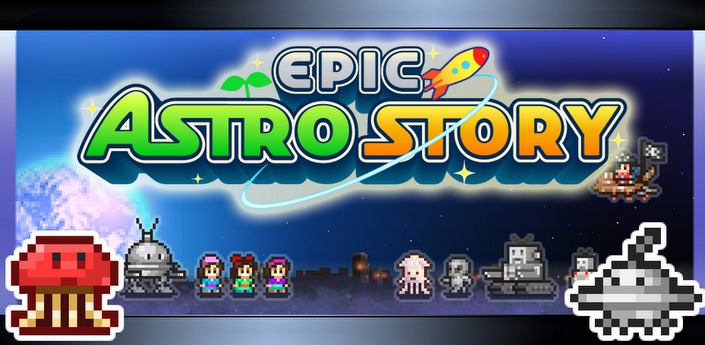 All good things must come to an end: I just finished the first Kairosoft game I would call bad. I’ve played a few Kairosoft sims that were unbalanced or boring, but never both. Epic Astro Story is the official low bar among a great series of games that range from training a soccer team to running a game design studio.
Epic Astro Story is a space colony sim where you build up an industrial/tourism complex on an empty planet while sending out away-parties to explore the darkness around you. While traveling through caves, mountains, and deserts, your team will fight against local bad guys for the right to the land.
I’ve had great success with Kairosoft games so far, most of them have clicked really well with me and my tastes, but from the start I had issues with Epic Astro Story. Here’s my review.
Read moreMay 07, 2012 by Nate
I had never played a Rayman game before last year, when I tried Rayman 3D. A port of the most renowned Rayman game, it didn't exactly endear the limbless whatsit to me. So when Rayman Origins was released six months ago, I was too busy scampering through Super Mario 3D Land to care.
Thus, I was busy gazing into a 3D mushroom kingdom when Origins earned rave reviews. The acclaim seemed fruitless, as Rayman Origins found slow initial sales and an early price slash. Still, the game made enough cash that a sequel is (almost certainly) on the way.
I had intended to check out Rayman Origins since it was showered with critical adulation, but it was the sequel leak (and heavy discounting) that pushed me into finally buying the game. I'm pretty keen at picking apart platformers in just a few minutes of play, so my first impressions of the game all but cemented my new outlook on Rayman.
Read moreMay 04, 2012 by Jonathan Ramundi
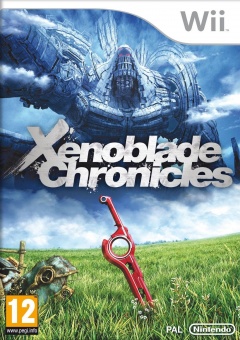 Nearly two years after its initial Japanese release, and eight months after finding its way to Europe and Australia, Nintendo of America finally saw fit to grace North American Wiis with the critically acclaimed Xenoblade Chronicles (though not without a lot of pestering it would seem). Debuting at E3 2009 under the title Monado: Beginning of the World, Monolith Soft's latest immediately captured the attention of RPG-starved Wii owners with its large, open environments, colourful atmosphere, and intriguing storyline.
Probably most intriguing, however, was the gameplay. Xenoblade—its title a tribute to Monolith's flagship franchise, Xenosaga—deviates considerably from traditional JRPGs, doing away with random encounters and turn-based combat. Instead, players do battle on the very map they explore, without a transition to a battle screen, and with the ability to see enemies long in advance, as many are simply animals going about their business in the game world. Battles themselves are much more tactical, seeing players manoeuvring about the battlefield for ideal position and using abilities at advantageous times.
Never mind that I'd been craving some decent RPG action for a while, I definitely wanted to see what Xenoblade had to offer, and was more than a little disappointed when it first looked as if I wouldn't get the chance. Better late than never, I guess. At least my Wii has something to do now besides collecting dust.
Read moreMay 02, 2012 by Nate

In Super Smash Bros, Director Masahiro Sakurai stripped the fighting game genre of its finger-tangling combos and built a new style from the core sensation he enjoyed the most: the dynamic "ad lib" nature of the fights. It was arguably the Nintendo 64's best game. In Kirby Air Ride, Sakurai boiled down the racing game to drifting and acceleration, then layered that core with Kirby flair and garish extras. It wasn't exactly the next Smash Bros.
Now, Sakurai's "disassembly and reassembly" approach takes on the shooter in Kid Icarus: Uprising. The father of Kirby and Smash Bros has transformed a quirky NES action platformer into half corridor shooter and half third-person shooter. It's no Smash success, but it's far from Air Ride's mediocre curiosity as well.
Read moreApril 30, 2012 by Greg Noe, Nate, Steve
 There are ambitious indie games like Fez, which go all out on their insane puzzles and clever solutions. Then there are ambitious indie games like the Blackwell series, which tells a tale of death with believable characters and full voice acting. And then there are ambitious indie games like A Valley Without Wind, which features a fully procedurally generated, side-scrolling action, massively multiplayer online world.
Developed by Arcen Games, A Valley Without Wind is, if anything, ambitious. It’s also genre defining, I personally haven’t played a lot of action RPG 2D MMOs, but now at least one exists. Released last week for Windows and Mac, here are our impressions on the game. They’re unsurprisingly varied.
Read moreApril 27, 2012 by Greg Noe
 The tower defense genre feels older than it is, with basically only five years under its belt since Desktop Tower Defense and its kin. But its games have seen so many variations to the model and appeared on so many platforms, that it feels very mature in its parameters of game design and implementation. And this is from a genre that has essentially never received a “triple-A” release and most sales come from direct downloads, not on discs or cartridges.
Solo indie developer Cliff Harris of Positech Games is now officially tackling the genre with Gratuitous Tank Battles, a sort of sequel to his popular Gratuitous Space Battles game from 2009. I had a great time playing that game, but didn’t realize at the time that Space Battles, boiled down, really is a tower defense game too. An excellent example on how varied the genre is, even if you don’t realize it.
But Tank Battles is a proper tower defense game with the familiar onslaught of units marching across the screen and grid-based gameplay that veterans of the genre will instantly recognize. It also features an attack mode for most missions letting you experience the other side of combat, and it wouldn’t be a Gratuitous game without an insane amount of unit creation and modification at your fingertips.
Read moreApril 25, 2012 by Steve
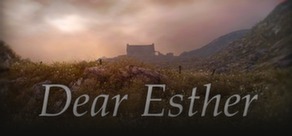 I first became aware of Dear Esther on the day it was released, as news passed that it recouped its Indie Fund investment in a mere six hours. Somehow, I entirely missed word of the game prior to that, but as I read more, I knew I had to play it. While it will take multiple playthroughs to obtain the game's full experience (due to semi-randomized dialogue), I came away a bit underwhelmed by the game. I normally eat up intentionally vague/confusing dialogue-based stories, but this story seems a bit more pedestrian than most (even if the vagueness fully makes sense within the story). But this in no way takes away from the game's other draw; its relentlessly gorgeous handcrafted visuals, with each frame packed in detail.
