September 14, 2011 by Greg Noe
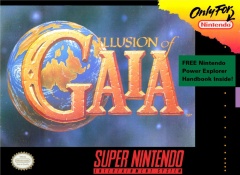 I didn’t play a whole lot of Enix games growing up. I rented a few titles for the Super Nintendo, including E.V.O.: The Search for Eden, Ogre Battle, and 7th Saga, but it wasn’t until I beat Star Ocean 2 during college that I could poke out the Enix notch in my belt. Their merger with Squaresoft in 2003 blew my mind, but I had grown up in the world where publishers were like armies, constantly battling it out with each other for supremacy; but in the real world it was all business, and the merger made sense.
Illusion of Gaia was released during the time when Enix was in a heated battle (business and fanboy-wise) with Squaresoft on the Super Nintendo platform. In its six year lifespan, both publishers released over 30 games each, many competing directly in sub-genres that seem too similar to be considered a coincidence. One of these face-offs was Secret of Mana from Squaresoft against Illusion of Gaia from Enix. Released in 1993, both games were action RPGs that happily broke the mold of the Final Fantasies and Dragon Quests.
But in the end, Squaresoft easily won the action RPG battle and the Super Nintendo war. Secret of Mana was an engrossing, multiplayer tale with a huge variety of weapons and magic, Illusion of Gaia was a rather rote, singleplayer, cobbled-together adventure with little variety. Here’s its review.
Read moreSeptember 12, 2011 by Nate
 Achievement Unlocked: Review a game older than you.
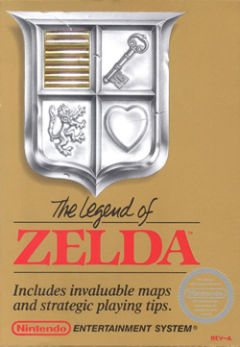
Zelda may be the most beloved video game franchise, but I've never counted myself among series super-fans. Since cutting my teeth on the series with Ocarina of Time, I've merely enjoyed all but a handful of games in the series. Don't get me wrong, they're all great, but I wouldn't put any in my top ten.
That said, I like checking out each title and comparing it with the rest of its ilk. Other than the experimental black sheep Zelda II: Adventure of Link, the first Legend of Zelda may be the series' most divisive game. Fans can't seem to agree whether the game's old school difficulty and unguided progression make it dated or just different. Lacking an in-game overworld map and never funneling players away from difficult areas, the NES original certainly requires more of its players than any Zelda since.
Nintendo recently launched its 3DS Ambassador program, giving the system's early adopters ten free NES games. I had been meaning to check out several of the ambassador titles, but none more so than The Legend of Zelda. Fifteen hours and a princess rescue later, I'm ready to weigh in on the Dated vs. Different debate.
Read moreSeptember 09, 2011 by Paul Abbamondi
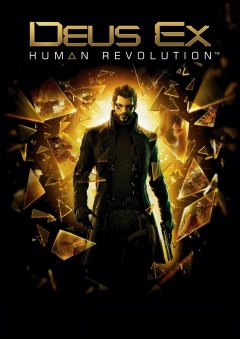 As a prequel to the original Deus Ex, which I've replayed numerous times—well, mostly that beginning level set on Liberty Island—Deus Ex: Human Revolution has a difficult task ahead of itself. It has to be more visually advanced than the 2000 offering, with updated gameplay mechanics, and yet keep things less technological in terms of story, as this is a time before JC Denton took on the Illuminati with his wild and crazy nano-augments, when augments were glorified.
Deus Ex is one of the earlier examples of fusing RPG elements with shooters, often allowing players to not even fire a gun so long as they upgrade their character correctly. Nowadays, with titles like Fallout: New Vegas and just about every shooter with a name implementing some kind of RPG leveling system, it's hard to say how tall Deus Ex: Human Revolution will stand.
Well, its opening hour is upon us; hope I upgraded my enjoyment augmentations enough.
Read moreSeptember 07, 2011 by Steve
 Plants vs. Zombies is a game I've been eyeing for a while. It regularly tempted me at $10 Steam with even cheaper sale prices. This summer's sale finally put me over the edge. Every so often you need some good tower defense action, and PvZ seemed like a unique yet highly praised take on the genre. Its cartoonish, Popcap/flash feel and simple five-lane setup makes things perfect for beginners. And it has enjoyed massive success over a huge variety of platforms. Originating on PC, PvZ has since expanded to every modern platform imaginable, both traditional and mobile. Popcap is undeniably a casual gaming powerhouse. The Bejeweled and Feeding Frenzy creators certainly know how to make products and pricing that clicks with the average consumer. They've been so successful that EA recently purchased the company for ~$750 million.
For the most part, PvZ exemplifies this success. It creates a casual-friendly atmosphere with calculated progressive learning combined with enough longevity and a tad of optional difficulty to round out the complete package. The game starts slowly, at first holding your hand with only a couple plant options (towers) available to defend your house from a weak zombie horde on a completely barren level. With only five lanes to defend, beginners will learn quickly what it takes to operate. In case they make mistakes, the game includes a get-out-of-jail-free card, in the form of zombie-clearing machines that activate and clear the lane should a zombie make it past the plants. For a while, the game introduces a new plant on almost every level, encouraging the player to try them out and discover what they're worth. Soon enough, juggling several plant types on more obnoxious levels will be a requirement.
Read moreSeptember 02, 2011 by Paul Abbamondi
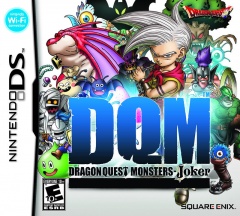 Two franchises I consider to be inherently Japanese are Dragon Quest—really, Dragon Warrior—and Pokemon, and both were born under the mighty and massive RPG tree, but have had their fair share of spin-offs. With Pokemon, its ranged from zaniness like taking pictures to brawling with other well-known gaming characters to rogue dungeon crawlers. As for Dragon Quest, they took a page out of their younger sibling's book, releasing Dragon Warrior Monsters in 1999 for the Game Boy Color; in it, a young boy is out to save his sister by collecting monsters, breeding them, and pitting them against other monsters. Pretty close to the Pokemon formula, but naturally featuring the classic monsters of the Dragon Quest franchise. Things like slimes, gremlins, and wyverns. There was more of a focus on taming monsters than simply capturing them, too. But it hooked players nonetheless.
The monster-raising series has continued on over the years, and I'm here today to give TOSE's 2007 Nintendo DS release Dragon Quest Monsters: Joker a try, a few weeks shy of the sequel's release. I have no expectations other than Pokemon mixed with my favorite classic RPG monsters, and maybe some light implementation of the DS touchscreen. And I hope the joker subtitle has nothing to do with that crazy jester from Dragon Quest VIII.
A half-hour review approaches!
Read moreAugust 31, 2011 by Greg Noe
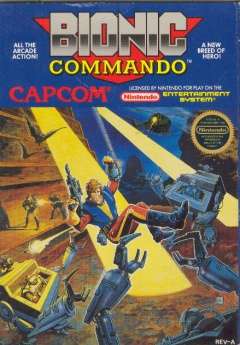 There once was a game named Bionic Commando, and then twenty years later there was another game named Bionic Commando. In some media, this would be called a remake, but when one features a generic soldier battling through different locations with a grappling hook and the other features a dreadlocked dude battling through an office building with cheesy one-liners, I wonder where the remake line is drawn.
Bionic Commando was released for the NES in 1988 by Capcom. It landed among a glut of platformers where characters did normal things like run and jump, but Bionic Commando bucked the trend and put you in the body of a slow-moving soldier with only his grappling hook at hand to move vertically. Its combination of solid but difficult gameplay and a branching level select entrenched it in the mind of gamers, which led to...
Bionic Commando was released on the Xbox 360, PlayStation 3, and Windows in 2009 by Capcom. It landed among a glut of actiony-platformer shooters where characters shot things until they died, and Bionic Commando did not buck the trend. Its combination of generic yet insulting gameplay and derivative story made it largely a totally forgotten game.
Neither Bionic Commandos is meant to be confused with Bionic Commando: Rearmed, which is an actual remake of Bionic Commando (for the NES), and released a year before Bionic Commando (the forgotten one on the more whiz-bangery systems). Or Bionic Commando: Rearmed 2, which is a sequel to the remake released before the game with the same name as the original.
I've played around with this tom-foolery before, particularly with Ninja Gaiden and Ninja Gaiden. A pair of games that both featured the same name and ninjas, but that's about it.
I'm going to play the first half-hour of each Bionic Commando, which adds up to an hour of Bionic Commandoness. I will then judge them entirely on 30 minutes of gaming and move on with my life.
Read moreAugust 29, 2011 by Nate
 Mega Man hasn't appeared in a game since March 2010's Mega Man 10. He's not scheduled to show his face again any time soon. That's so weird. The franchise has been the face of slapdash sequel profitability for two decades, so it's strange that we've gone a year and a half without any original Mega Man releases and may not see another any time soon.
As recently as three months ago, two Mega Man games were in development. Both were announced last year. Both were canned this summer. While one of those two aborted games was on course for Xbox Live Arcade obscurity, the other was anything but ordinary. Niche series revivals, long-removed sequels, fan involvement, executive politics...the Mega Man Legends 3 Project opened plenty of worm cans in the nine months before its abortion.
One can, in particular, piqued my curiosity: the paid demo. And I think it might have the most regrettable casualty in the game's cancellation. Before you groan, hear me out.
Read moreAugust 26, 2011 by Nate
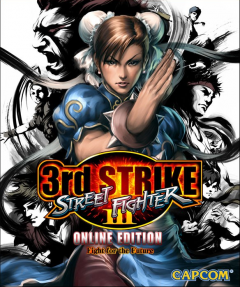 I have a soft spot for fighting games. Even though my multiplayer game time has dwindled to almost nothing, I relish the chopsocky action too much to quit entirely. My interest has further grown alongside the genre's worldwide revival, sparked by 2009's Street Fighter IV, which produces more and more games that exhibit extravagant martial arts action with tournament balance. This pleases me.
Not content to milk just Street Fighter IV year after year, Capcom's digging deeper into its past to re-release what many consider its finest fighter, Street Fighter III: Third Strike. The fan favorite finds its way onto Xbox Live Arcade and PlayStation Network as Street Fighter III: Third Strike Online Edition, adorned with bells and whistles that appear to go beyond what fans would expect from a modern port. SF3:TSOE boasts visual filters, remixed music, concept art, detailed tutorials, expert trials, Youtube match uploads, and even renowned GGPO netcode that promises smooth and customizable online performance.
I have played Third Strike a few times in days long past. I remember some of the game-specific basics, like parrying, but am unfamiliar with most characters. I'll see what the trials can teach me about the game's mechanics beyond parrying. Next, I'll see what trials are available for Dudley, a boxer I recognize from Super Street Fighter IV but have never used in Third Strike. Finally, I'll check out Arcade mode and see what the game has to offer as a singleplayer experience.
Check out five minutes of parries, Corkscrew Blows, and everything else that makes up gentlemanly fighting.
Read moreAugust 24, 2011 by Greg Noe
 Remember the first time you heard the Super Mario Bros. theme? Or The Legend of Zelda overworld song? They are classic bits of music that have been replayed and remixed hundreds of times. Some games would undoubtedly not stand out as much in the nostalgic corner of our mind without their tunes to accompany them.
A focus on quality game soundtracks seems to be on the rise, with indie titles Bastion and Jamestown both featuring a robust cache of songs that not only sound great while playing the game, but seem appropriate to listen to any other time of the day. There was a time at the end of the SNES ere and throughout the PS1 lifetime that video game soundtracks were huge. Through a combination of audio CDs becoming cheap to buy and MIDI files even cheaper to trade, games like Chrono Trigger, Donkey Kong Country, and Final Fantasy VI laid the groundwork for game music relevance.
Which brings us to Squaresoft's 1999 JRPG, Final Fantasy VIII. Nobuo Uematsu, longtime Final Fantasy composer, spent years writing music for the robust but limiting NES and SNES consoles before finally chewing his teeth on CD audio with the PS1. But Final Fantasy VII, while featuring a quality soundtrack, turned out to be merely preperation for Final Fantasy VIII. Here's my review of its Original Soundtrack.
Read moreAugust 22, 2011 by Greg Noe
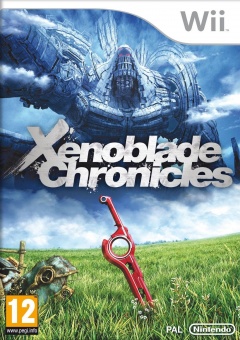 The Nintendo Wii is dead in North America. Like the Nintendo 64 and Gamecube before it, Nintendo of America has essentially abandoned the platform at least a year before their next console will be on sale. For any of those fans holding on to the idea that the Wii was still a targeted gaming platform for quality new releases, all their hopes were destroyed when NoA confirmed they would not be bringing Xenoblade Chronicles, The Last Story, or Pandora’s Tower across the Pacific.
As three highly touted RPG and action titles from Japanese studios, gamers were excited at the prospect of English releases, especially late in the Wii’s lifespan with only a new Zelda on the horizon. And in reverse of what was so common in the ‘90s, Nintendo of Europe decided to localize all three titles while North America sat out.
So here we are with an actual English version of Xenoblade Chronicles, developed by Monolith Software. Monolith is known for the Xenosaga series on the PS2 and the two Baten Kaitos games on the Gamecube, but most of the team is also made up of former developers of Xenogears and Chrono Cross at Squaresoft. Nintendo has owned a majority share of Monolith since 2007 so they are considered a first party developer.
Unless Xenoblade receives an official North American release, importing or piracy are your only real options, unfortunately. While some gamers are still optimistic, I saw how Nintendo ignored fans getting behind the EarthBound sequel Mother 3 a few years ago, and have little doubt in Nintendo of America ever touching it. But for what it’s worth, here’s my first hour review of Xenoblade Chronicles for the Wii.
Read more