July 25, 2011 by Greg Noe
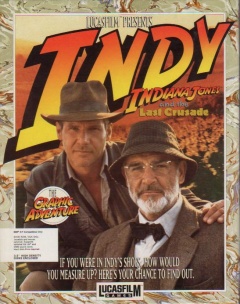 For being a rather popular film series, there sure haven’t been a lot of Indiana Jones video games released. Well, there have, but not in recent memory, the LEGO Indiana Jones game I played a few years ago is pretty much it besides a few unheralded titles here and there. Indiana Jones and the Last Crusade was released in 1989, that’s how far back we’re traveling today for a first hour review.
Developed by Lucasarts using their SCUMM adventure game engine, Last Crusade seemed like a slam dunk of a title to coincide with the release of the movie, especially as it had Ron Gilbert of pre-Monkey Island fame leading the development team. Indiana Jones wouldn’t be the first movie tie-in game ever, but it would probably be the first to follow the story so closely and carefully.
I’m making my way through my Steam backlog now, and I wanted to play a bunch of early Lucasarts titles since I’m a big Monkey Island fan and I seem to owe it to myself to play their other games. Last Crusade is essentially the oldest one available (Steam does not carry Maniac Mansion or Zac McKracken), so I’m starting here. I’m not sure if I’ll first hour their entire catalog, but here’s the review of the first hour of Indiana Jones and the Last Crusade.
Read moreJuly 22, 2011 by Greg Noe
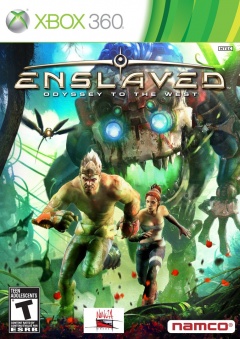 I haven't been keeping my New Years Resolution of writing more first hour reviews very well, it took us seven months to get through day eight! Not a very good pace, in my opinion. I've been slacking quite a bit as of late, but Nate has been stepping it up with some excellent first hour reviews accompanied by some well edited videos.
So here's the latest 24 hours of gaming, we've now produced as many first hour reviews as there are episodes of the TV show 24, which means absolutely nothing, but it's a fun fact you can tell your friends.
As for the games? The great thing about playing just the first hour is that you really get to try out a variety of games. Everything from the 18 year old Illusion of Gaia to the recent blockbuster Portal 2. Genres cover Wii shovelware to gun porn to time traveling RPGs, we've got it all.
I completed my goal of beating Mass Effect 2 for the second time and completing Dragon Age: Origins earlier this year, and I've been giving my Steam backlog a lot of attention, so look for some old school Lucasarts first hours in the near future. Thanks for reading.
Read moreJuly 20, 2011 by Steve
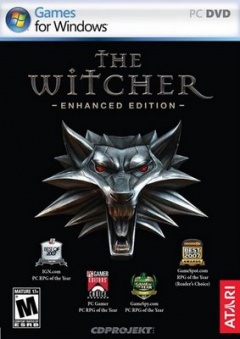 Very rarely do developers aim to make AAA PC exclusives anymore. As one of the most well regarded action-rpgs in recent history and aided by numerous recommendations, I felt it was my duty to try The Witcher. Its developer, CD Projekt, is a Polish firm who's been translating and publishing PC games since the mid-90s. Recently they've been spending money to expand, opening up the RED STUDIO for game development and creating Good Old Games as a DRM-free retro gaming service for modern computers.
So far, only The Witcher and its sequel have been released by the studio, with Witcher coming out in October 2007 and Assassins of Kings hitting just two months ago (in May 2011). These projects are large in scope, using source material from a Polish novel series and brought to life by large development teams. The Witcher immediately brings a fresh start to the tale as our hero Geralt mysteriously reappears with amnesia, after apparently being killed by an angry mob. So let's see how this story goes. I'm playing the latest version, the Enhanced Edition Director's Cut.
Read moreJuly 18, 2011 by Greg Noe
 I apologize for writing more about mobile games lately than general mainstream console titles. I’m in the middle of moving and sitting down for 15 minutes with Hot Springs Story, Angry Birds, or Cut the Rope is a lot easier than an hour or two with Dragon Age II.
So I’ve been tearing through a series of cheap or free games on the Android, taking advantage of Amazon’s free app of the day and sales on the Market. The great thing about mobile games, even over DS titles, is that they’re so darn cheap, if you don’t like the game, delete it and move on. While I could write a few paragraphs on a game I only gave 15 minutes then promptly deleted, I’d rather focus my energy on games I really enjoyed and believe are worth even their minor asking price.
Cut the Rope recently landed on the Android platform after a successful run on Apple’s iOS, and after first hitting the indie market GetJar for free (supported by ads), it is now on the official Market and Amazon ad-free for a dollar. Here’s my review of Cut the Rope on Android.
Read moreJuly 15, 2011 by Paul Abbamondi
 Some months back, while browsing the shelves at our local GameStop, my wife picked out Harry Potter and the Deathly Hallows, Part One for the Nintendo DS; I had earlier warned her of the bad reviews for the Kinect-heavy atrocity of the same name that dropped on the Xbox 360, and we both assumed that the DS version would almost have to be better than that. However, she did not play for very long, returning to her staples of Animal Crossing: Wild World and The New Super Mario Bros. She either lost interest or got stuck; at one point, I had to help her through an unclear potion-making minigame.
With the final installment of the final movie creeping closer, I thought this would be a perfect time to see how solid of a Harry Potter game it actually is. Plus, I had some time to kill while on vacation.
Aparecium!
Read moreJuly 13, 2011 by Nate
 (WARNING: This post discusses significant plot points of Infamous and Infamous 2 in detail. You are now at the gates of Spoiler City. Turn back if you intend to play the game with a blank slate someday.)
One of the cornerstones of horror is mystery. People fear the unknown, enough so that they will fill in the blanks with their own personal hellspawn when presented with a few creepy clues. Things that go bump in the night don't need to bare glistening fangs or a bloody hook to terrify us: they just have to bump.
This connection is easily exploited to make a good scare even better. It sounds crazy that so many left theaters spooked after the Blair Witch Project, considering the titular monster was never shown, yet that's exactly why the movie was a hit. Cloverfield saw that success and adapted it to trailers and TV spots, depicting a Godzilla-level monster attack from the view of those unable to see the monster directly. Video games are catching on as well, with many praising Amnesia: The Dark Descent for providing scares when nothing's there.
Infamous 2 isn't a horror game, but it makes excellent use of this deprivation technique to ramp up the suspense. The story's core is Cole MacGrath's quest to prepare for the destined arrival of The Beast, a being of such power and wrath that only at his fullest potential could the hero hope to stop it. Throughout the game, chilling reminders of this impending cataclysm are ever present, casting a shadow of despair that even overcasts Cole's considerable predicaments in the here and now. And when the Beast finally arrives, revealing itself at last to the wearied but hardened superman, the suspense is replaced with a dread so thick that it suffocates the player in a way no game ever has before.
Read moreJuly 11, 2011 by Greg Noe
 Game Dev Story was kind of a perfect storm video game for me. It combined my love for deep simulations with game development and threw in some lovely pixel art to top it all off. Hot Springs Story is Game Dev’s successor, and while I have been in hot springs in Japan, I had little interest in managing one. But since this is Kairosoft and knowing how much I enjoyed developing games within a game, I had to jump at it.
While I originally played Game Dev Story on an iPod Touch, I played Hot Springs Story on an Android EVO 4G. It has a much larger and better looking screen, which is great because Hot Springs Story does a much grander job taking advantage of all the screen real estate available.
Let’s get into my review of Hot Springs Story, developed by Kairosoft for Android and iOS.
Read moreJuly 08, 2011 by Greg Noe
 I enjoyed Dragon Age: Origins quite a bit, but it was a rocky ride to get going. Origins has a lot of stats, a lot of skill trees, and what I found to be a somewhat confusing array of attributes to put points into. When I heard that Dragon Age II was being developed to address many of those aspects of the game, plus a complete overhaul of the dialog system to make it similar to Mass Effect, I was pretty excited.
When Dragon Age II was released, it was met with a Spore-like backlash that railed against everything even semi-related to the game. Gamers lamented the Mass Effectification of their beloved hardcore RPG (which I seemed to deem a compliment reading from afar), and while the professional reviews of the game were lower than Origins but still highly respectable, a seemingly large group of gamers tossed goose eggs at it.
I’ve always been in the play-it-myself group of gamers. I can understand some of the spite, but forming an opinion before you even play the game usually makes one look foolish (and heck, I often look foolish after just an hour!).
Here’s my first hour review of Dragon Age II, released by BioWare in March, 2011.
Read moreJuly 06, 2011 by Nate
 I held out on the HD console era for almost four years. Through late 2009, I was happy owning only a Wii, with its quirky library and dependable first-party franchises. Sure, modern online features and the robust third-party support made the HD twins appealing, but I abstained admirably. Uncharted 2: Among Thieves was the game that finally forced my hand.
I don't know why, but I had to have it. Whether it was the tone, the hype, or merely the timing, something about Uncharted 2 commanded me to buy a PS3. Weeks before the game launched, Naughty Dog held a public multiplayer beta; I bought the newly slimmed PS3 and jumped in. I had a great time in the trial, bought the full game, loved the singleplayer, and the rest is history.
Two years is the standard wait for a sequel anymore, and in 2011, we have Uncharted 3: Drake's Deception to look forward to. Once again, the developer has opened a multiplayer beta to the public, this time nearly six months before launch. Naughty Dog has said their goal is to make Uncharted 3 THE multiplayer game for PS3. Based on my time with the beta thus far, its candidacy can't be denied.
As I did for the Killzone 3 beta, I will outline the Uncharted 3 multiplayer beta's game mechanics and feature set. I've also included clips from a few matches I played on the beta's second day (day one was a mess of empty matches and game crashes, later fixed through a title update).
Read moreJuly 04, 2011 by Greg Noe
 I just finished up my playthrough of the hardest difficulty in Mass Effect 2, and in the process finished unlocking all the game’s achievements along with playing all the downloadable content released after my first playthrough. I missed quite a bit of content, including Overlord and Lair of the Shadow Broker, but that’s all been played and reviewed now.
Which leaves me with just Arrival, the most recent and supposedly last piece of DLC released in February 2011. It is meant to bridge the gap between Mass Effect 2 and Mass Effect 3, and from the E3 preview of the third game, it will kick off with Commander Shepard feeling the repercussions of his decisions in the DLC. An interesting decision to place a semi-major plot element in a paid piece of content, but that’s business.
After a bum-rush of Mass Effect 2 related reviews over the past few months, this is probably my second to last piece on the game. I’m planning a Daddy Issues feature and that will be it (unless BioWare sneaks another piece of downloadable content on us, which seems unlikely). But don’t worry, I still need to write about all the different comics in the Mass Effect universe, so there is still more to come.
Mass Effect: Arrival costs 560 MS points or $7.
Read more