March 31, 2011 by Nate
 Any time a creator of game technology sets a new standard, they want to show it off in a way that gets potential customers dreaming about what games they might be playing with it. The Final Fantasy VII tech demo for PS3 was meant to show off the graphical leap that Sony's Spiderman-fonted grill console could muster...and, of course, hype fans up for a remake that would never exist. Peter Molyneux's Milo was a proof of concept that Kinect could, theoretically, be an interaction simulator. With the game's cancellation, it looks like that will stay a theory for the time being. And who could forget Epic's "meat cube" demo for Unreal Engine 3, newly improved for Gears of War 2? And yet, here we are in 2011 with no cubes of messy meat to play with whatsoever.
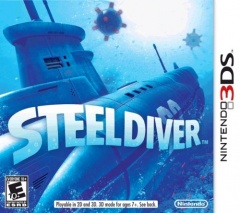
Sometimes, what starts as a tech demo eventually becomes a retail product. Such is the case with Steel Diver, possibly the only submarine video game I know of. What is now a 3DS launch title was originally meant to show off the brand new use of the touch screen as a controller...six years ago, for the original Nintendo DS. It seems Nintendo decided to take that aged tech demo, update its visuals for the new hardware, and profit.
So here we are at the 3DS launch, with three first party retail titles from Nintendo. One appears to merely be a graphical update to the Nintendo DS' second best-selling game. Another seems to be made entirely of assets from Nintendo's ridiculously successful Wii Sports series. Could Steel Diver, a tech demo that was forgotten a generation ago, prove to be a niche hit lurking in the depths, or will it continue to torpedo into obscurity?
Read moreMarch 30, 2011 by Nate
 As much as Nintendo frustrates me with their recent localization decisions, they have their triumphs as well. Releasing Sin & Punishment on the Virtual Console outside of Japan was a victory, effortless as it might have been. Rhythm Tengoku was a niche hit on the Game Boy Advance, but its DS follow-up had even Beyonce singing its praises. And when Nintendo finally brought its Famicom Wars and Fire Emblem strategy games to the west on the GBA, gamers outside of Japan suddenly had two new franchises to thank the Big N for.
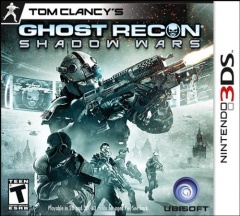
And they're not the only ones: Julian Gollop, creator of the X-COM: UFO Defense series, is a big fan of Advance Wars and Fire Emblem. He said as much in a refreshingly candid interview about his newest game, Ghost Recon: Shadow Wars, a 3DS launch title that Gollop was inspired to create after experiencing Nintendo's strategy duo.
I've had only brief experiences with the strategy genre as it exists on PC, where Gollop's games mostly reside. And I've played maybe ten minutes of a Ghost Recon game. But I am a big fan of games like Advance Wars: Dual Strike and Fire Emblem: Path of Radiance. And though I'm eager to see what Nintendo has in store for those franchises in the future, I know what I'll be getting: more of the same. On the other hand, Gollop's take on turn-based tactics might introduce some fresh elements to the formula. Let's see if any of those show up within the game's first thirty minutes.
Read more
March 29, 2011 by Nate
 The island from Lost is its own character. It's mysterious, malevolent, and seemingly sentient. It's more than just a setting, interacting with each of the show's characters as much as any other person stranded there.
Nintendo wants WuHu Island to be like that. Well, sort of. Not the evil part, of course. Where the island from Lost is a place full of peril, pitfalls, and plotholes, WuHu Island is familiar, comfortable, and friendly. It is supposed to be like a favorite character, an entity that the player reminisces with every time they meet. That's why it's already shown up in three different casual Nintendo titles (Wii Fit, Wii Sports Resort, and Wii Fit Plus).
Make that four, as Nintendo brings Mii back to WuHu island, this time exclusively for airborne activities in Pilotwings Resort. Pilotwings is no stranger to acting as the "tech demo" launch title for new visual splendor; the original SNES game introduced the world to Mode 7 Mapping while its Nintendo 64 sequel showed off the new system's polygonal graphics from a birds' eye view.
This will be my second visit to WuHu Island, after the WiiMotion+ showcase that was Wii Sports Resort. There was a certain charm to staging the various activities around the island, full of recognizable landmarks and curiosities. However, it could just as easily be argued that this is all laziness on Nintendo's part, recycling assets they created years ago across a number of games. Will a half-hour at WuHu Island rekindle warm memories of jet skis and archery or has this vacation hotspot gone cold?
Read moreMarch 28, 2011 by Nate
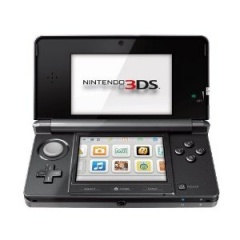 When I first take home a new system, I like to get a feel for it before I play my first game. I check out the menus, play with the options, and poke around for Easter eggs. I imagine most people brought home their Gamecubes with the intention of checking out the newest Death Star visuals ASAP, but I had just as much fun wandering around the system's cube-shaped GUI for the first time. The 3DS is no different. Before I popped in one of the launch titles, I took some time to feel out every nook and cranny on Nintendo's newest portable system.
This is a special case for two reasons. The obvious quirk is the system's ability to display 3D visuals without the need for special eyewear. Am I going to get headaches? My personal history with 3D movies says I'll have some cranial pounding and eye discomfort for a few minutes, then an unhindered experience following the adjustment period. On the other hand, when I checked out a 3DS kiosk at Best Buy for about 15 minutes, I had a headache for the next two hours. I'm willing to bet the experience won't be as bad in the comfort my own home. I'm gambling $250 on it, to be exact.
The second consideration is the apparent multitude of unorthodox, playful features that are bundled in with the system. Early reports have noted that there are a number of built-in features and games involving the system's cameras, data transfer tools, and other special features; there are even augmented reality cards that you'll be able to fool around with right out of the box.
I've poked around the 3DS menus for about an hour before checking out my first game. Here's what I found.
Read moreMarch 25, 2011 by Paul Abbamondi
 If there’s one new videogame fad I absolutely hate more than 3D anything, it has to be tiny text. I'm not sure what specifics need to be required to obtain tiny text status, but they most likely sit somewhere between squinting and extreme squinting. Over the years, text in videogames has gotten smaller and smaller, and I'm not exactly sure why. If you look back at screenshots of, say, SNES games, you'll see the font used is generally huge and spaced far apart, almost taking up one-third of the game's screen.
No mistaking what that fly is saying in Breath of Fire, that's for sure. This font size guarantees readability. Some might say this is a little too big. However, compare this font size with that of any modern game, and it's clear which gaming generation pandered to the literate more. Either way, this is a problem, and while not every videogame suffers from it, many big name titles shockingly do.
Read moreMarch 23, 2011 by Greg Noe
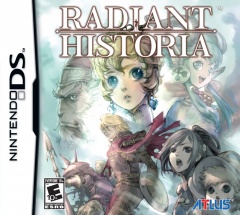 A year ago I vented how Persona 3 and Odin Sphere had destroyed my love for Japanese RPGs, one of my favorite video game genres growing up. I might have been a bit dramatic about the situation, but the two games left such bad tastes in my mouth I had to take a break from the genre. This lasted about six months before I ventured back into the land of turn-based rising sun with Sega’s Infinite Space, a game that has all the trappings of crappy JRPGs but turned out to be pretty great in the end.
Since then I’ve beaten Golden Sun 3: Dark Dawn, Black Sigil: Blade of the Exiled, and Radiant Historia. It’s been a mixed bag and a reminder that I’m not back in love with the genre, but one game in particular pretty much brought me back into the fold: Atlus’ newest Nintendo DS title, Radiant Historia.
Released in February, Radiant Historia chewed up more portable gaming time than anything I’ve played in recent memory. The idea that a 50 hour game should be imposing to someone with limited gaming time like myself didn’t matter, I plowed through it and the game was worth every minute. Here’s my review of Radiant Historia.
Read moreMarch 21, 2011 by Nate
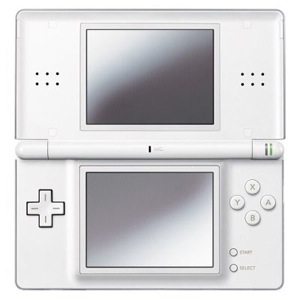 The Nintendo DS was the first game system that I followed from announcement to launch. It was way back early 2004 that Nintendo first hinted at a dual-screened handheld, then codenamed "Nitro." Considering that was the only information available, it's not surprising that many questioned Nintendo's strategy. Why two screens? Nintendo offered some hypothetical benefits, like extra camera angles for sports games, but their words were hardly convincing. Little did we know, it was Nintendo's first step into the "blue ocean" strategy that would lead the company to greener pastures.
And yet, the original DS launch in November 2004 came and went with little fanfare. I was aware of the date, but didn't even realized that it arrived until I walked through a Wal-Mart electronics section and saw the grey handheld on the shelves. I kept walking. I was Nintendo faithful, sure, but it was hard to get excited about a launch lineup headlined by something nearly a decade old. It wasn't until the impending release of Kirby Canvas Curse in the summer of 2005 that I decided to bite the bullet, trading in half of my Gamecube library to GameStop in order to pay off the Nintendo DS and one game.
While it's certainly worth praise in its own right, I think Canvas Curse deserves to be remembered as the flagship of the DS library; it was the first of a fleet of incredible games that would follow in its wake. A system redesign, dubbed the DS Lite, accompanied the platform's newfound software vigor. Reduced size, brighter screens, and an iPod aesthetic provided enough worth for many to upgrade (including me) and many more to buy in for the first time. The sleeker profile and beefier games are what truly began the success story of the best-selling handheld game system ever.
But even Nintendo's first detour in the generations-old graphical arms race would lead to a dead end eventually. With the launch of a successor, the 3DS, history tells us that the best we can hope for is a year or two of life support for what was once Nintendo's "third pillar." It was an incredible performance that none could have predicted, and I think the Nintendo DS deserves a hearty round of applause before its curtain call. I've decided to contribute to the celebration in that age-old tradition of blogging: the top ten list.
In no particular order, here are ten great games that exemplified some aspect of the Nintendo DS' legacy.
Read moreMarch 17, 2011 by Greg Noe
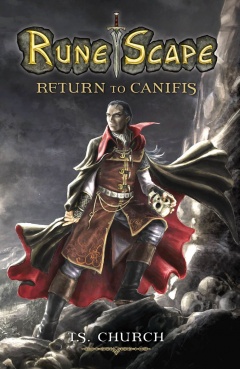 I read RuneScape: Betrayal at Falador a few months ago and enjoyed it for what it was: light-fantasy action with a pretty decent cast of characters in a world I was totally unfamiliar with. T.S. Church managed to bring me up to speed quickly on a large, established world filled with kingdoms, monarchs, and gods.
Church has readied RuneScape: Return to Canifis for release next week, and it is not only a better book than its predecessor, it actually makes for a pretty darn good fantasy read. Here is my review of T.S. Church’s new novel, RuneScape: Return to Canifis.
RuneScape: Return to Canifis was provided to me by the publisher, Titan Books.
Read moreMarch 16, 2011 by Greg Noe
 Before I say anything, I beat Okami. It was a fun game with some issues, and my PlayStation 2 version is an important part of my video game collection.
Before I say anything else, I didn’t like the first hour of Okami. It’s one of the few games I went back to play the first hour of because I thought it would illustrate well what a bad first hour looked like, and I was right. But it’s also a good example of where this site can go wrong. Some games like Okami just take a long time to get going, but this can also cause gamers to quit prematurely, like my friend and fellow writer Steve did.
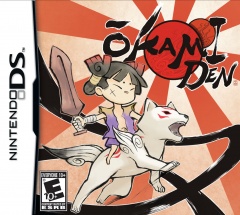
Enter Okamiden, the chibi-ized version of Okami for the Nintendo DS. Okamiden will likely go down as one of the last good DS games before the 3DS is released in a few weeks (hopefully time remembers Radiant Historia, as well). Because I enjoyed Okami but didn’t like its first hour, Okamiden seems like the perfect game to try out for a bit. Will Capcom repeat the same mistakes they made with Okami? Will the game be too targeted for children? How will the gameplay and stylized graphics translate to the small screen?
Released yesterday, here is Okamiden’s first hour.
Read moreMarch 14, 2011 by Nate
 Nintendo has made a killing packaging classic pen-and-paper activities into DS games. Picross, Sudoku, Crosswords...but one of the major successes is the Professor Layton series. Developed by Level 5 and published by Nintendo outside of Japan, the franchise tasks players with solving puzzles and riddles in order to explore a storyline brimming with mystery. The puzzling travels of Professor Layton and his apprentice Luke are a hit with casuals and hardcore alike, selling over ten million units worldwide between the series' five titles.
Of the three titles available outside Japan, I've only played the first, Curious Village. It's certainly full of cranium-crunching riddles, but I wasn't as taken by the rest of the package as many were. Decent production values aside, there wasn't much that impressed me from the strange story of Layton, Luke, and the peculiar villagers. I'd almost wished the game was a more sterile package, like so many other brainy DS productions. Most would probably disagree, seeing the worth in framing these teasers within a narrative.
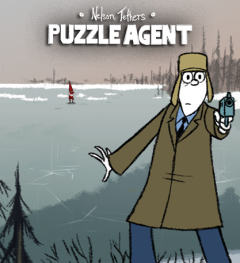
Enter Nelson Tethers: Puzzle Agent. I bought this budget PC title in -- what else? -- a Steam bundle during the holiday season. Nelson clearly took notes from one of the Professor's lectures, because Puzzle Agent's premise is very similar to Curious Village, having the player explore a mysterious little town by solving riddles for its puzzle-obsessed populace. But unlike Curious Village, I actually enjoyed the overall experience even more than the puzzles that pervade it.
