August 19, 2010 by Paul Eastwood
 Epsiode 8 of The First Hour Podcast, the only official podcast of firsthour.net!
This week Greg and Paul discuss Dragon Quest IX, voice acting in video games, Mafia 2, BioShock Infinite, and more! This is a game filled podcast that you can not miss.
DownloadTheme Music
Super Mario World 'Turning Terrors' - AeroZ
August 18, 2010 by Nate
 "No More Heroes: The Movie." That's how I've been introduced to a film that opened last Friday, Scott Pilgrim vs. The World, each and every time a friend first mentions it to me. I suppose it's a valid parallel: it stars a maladjusted young adult living on the fringe of suburban society fighting over-the-top duels through an organization in order to win official rights to a girl he already has some sway with, utilizing a presentation style that pays tribute to classic video game quirks. Whatever you liken it to, it's a unique movie worth seeing for any self-diagnosed gaming nostalgist, or anyone who wants to see a quirky romantic comedy that doesn't take itself seriously and manages to make Michael Cera actually seem kind of badass.
Prior to seeing the movie, I played a bit of Scott Pilgrim vs. The World: The Game, which was released on PlayStation Network last Tuesday and will be available on Xbox Live Arcade one week from today. In an interesting blend of media paying homage to each other, Scott Pilgrim: The Game borrows its name from its film counterpart, its artistic style from the comic series that was adapted into the movie, and its gameplay from the classic video games that infuse the culture of the comics and movie. Specifically, this is a River City Ransom clone if ever there was one, sharing that cult classic's brawler mechanics, RPG elements, and humorous tone.
Considering I wasn't too impressed with River City Ransom when I downloaded it off the Virtual Console, I had mixed feelings going into Scott Pilgrim vs. The World: The Game. I'm all for modern throwbacks to the era of chiptunes and sprites, but I've never been a big supporter of the RCR-style focus on stats. How did the trade-off fare in my first hour with the game?
Read moreAugust 17, 2010 by Greg Noe
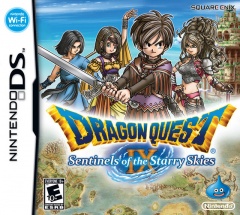 Nintendo and censorship used to go together like peanut butter and jelly. There are dozens of examples of changes between Japanese and North American versions of Nintendo console games, along with a handful of tales of U.S. and European developers being forced to alter their game in some way to receive the all-important Nintendo Seal of Quality. The hammer has let up over the past few years though, and I didn't really realize this until I started playing Dragon Quest IX.
Dragon Quest IX, while developed by the good folks at Level 5, was published by Nintendo outside of Japan. It's an enormous game with buckets of text, and since I'm about 80% of the way through the game, I can honestly say Nintendo did a stellar job translating it for English speakers. There are puns galore and not a single character, item, or town name is wasted potential. Of course, I was greatly impressed by the fan translation of Mother 3 which was done by a single guy, so maybe my standards are low.
Read moreAugust 16, 2010 by Greg Noe
 There's a bit of a parallel with the games I've been playing lately. Super Mario Galaxy 2 and Gears of War 2 are both sequels to games released this generation, and at first glance, appear to be essentially re-releases of the first game with a new shine. Where the parallels end though is that while Super Mario Galaxy 2 has a ton of new features, Gears of War 2... does not.
I'm honestly surprised, a bit blown away actually, by how little Epic Games bothered to improve on the original Gears of War game. Gears of War 2 supposedly added five weapons, but only one really stands out. There might also be some new enemies, but as they're all so butt ugly and A.I.-dumb it doesn't really matter. There are a bunch of new locations, but everything is still all brown and gray with some city levels and underground levels.
Gears of War 2 is really just Gears of War 1.1.
Read moreAugust 13, 2010 by Nate
 Back when I was a kid, I loved telling people about things that I enjoyed. I would explain, in excessive detail, how amazing whatever I had just witnessed was. I distinctly remember recounting the entirety of a particularly amazing Simpsons episode to a friend in grade school, to the point where he rolled his eyes and walked away in disbelief of my obsession. I understood that he couldn't appreciate the episode without watching it and that my overexcited babbling would do Leonard Nimoy's brilliant guest appearance no justice, but I couldn't stop myself. I find myself thinking back on old times like this one because, as I sit down to write first hour reviews for this site, I look at the massive walls of text that result from my sixty minutes with some very entertaining games and think about just how powerless those words are compared to the experience in my mind.
On that note, I've had to do some significant editing to this first hour review of Sin & Punishment: Star Successor. I knew I would enjoy the game after playing through its prequel a few weeks ago for the first time, but my enthusiastic ramblings from that first hour were anything but concise. I threw out a lot of what I had originally written, and it's still far longer than the average first hour review here. If you want the long and short of it up front, just imagine playing Star Fox 64 with one hand and House of the Dead with the other and you've got the jist of Star Successor. Only this version of Star Fox 64 is much more difficult, and this version of House of the Dead has dozens of things to shoot on the screen almost all the time.
I'll just go ahead and say it up front: Sin & Punishment: Star Successor is a serious contender for my game of the year. I do hope the text gives you an idea of how the game works and whether or not you should go out and buy it right this very minute, but one glance at the sheer length of this review should let you know just how much I enjoyed it.
Read moreAugust 11, 2010 by Greg Noe
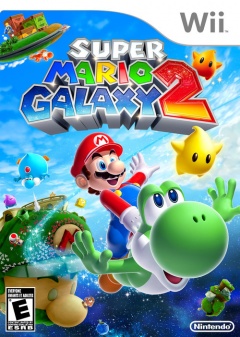 It has been a while since we've seen two core Mario series games on one Nintendo system in a while, you need to go back to the Super Nintendo with the two Super Mario Worlds for the last example, and it is highly arguable whether Yoshi's Island can be considered a core Mario game for that matter. Surprisingly, Nintendo announced Super Mario Galaxy 2 last year and the game was released this May to much herald and acclaim. Glancing at Metacritic, the top two games for the Wii are our two Galaxies, an incredible triumph for Nintendo.
I actually beat Super Mario Galaxy 2 well over a month ago, but I decided, much like I did with the first Super Mario Galaxy, to wait until I had collected all 120 stars before writing a review. Actually, make that 240, no... 242 stars! Galaxy 2 more than doubles the collectible star count over the original while keeping the game both interesting and challenging. But is the game too much like the Super Mario Galaxy, or does it set itself apart enough to transcend the typical sequel failings we've been witness of lately?
For a look at the game's opening, check out Nate's first hour review of Super Mario Galaxy 2 published right after release.
Read moreAugust 10, 2010 by Greg Noe
Well, this is pretty much the most boring thing we post here at the First Hour, but we all mark time in various ways and this is how we do it. We have just completed day six at the First Hour, meaning we completed another 24 first hour reviews putting our total at 144 hours. Definitely an awesome number and an incredible amount of gaming.
Anyways, here's the rundown of day six, a great list of games to be sure, and a number of them the writers here went on to finish up. That's a sign of a great first hour!
Read moreAugust 09, 2010 by Ian M. Bagley
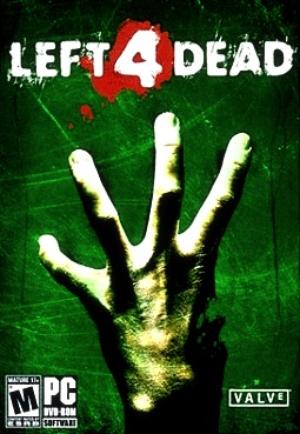 When I heard the announcement for Left 4 Dead, I was enormously elated. Finally, a game dedicated to fast-paced zombie action. A game I could rely on to really satisfy my urges to kill a swarm of infected. Then, when I saw the videos of people at E3 playing it for thirty minutes and then heading to the back of the huge line to play it again, there was no question.
My hunger for a real zombie game had been stirring for years. I hated Resident Evil, and still do. The idea of searching around everywhere and solving more puzzles than killing zombies -- I was disgusted. The only thing that helped curve my thirst was Counter Strike: Source, where my friend and I would play “zombies” by pitting ourselves against 30 or so bots and allowing them to only use knives. I was even happier to hear that was the way Valve decided to make Left 4 Dead. They did the exact same thing.
I was counting the days in November, 2008, for the game's release. Every day at college just seemed to drag on and on, forever, until finally the day came. My classes felt longer than those of my final days before Christmas Break. When I got done with school the day of Left 4 Dead's release, I went straight to the store to pick up the game.
I purchased the PC version, and played through the entire game in a very brief period of time, but that was okay. With all of the achievements to be had, as well as the scoring and varying difficulty levels, this game had more replay-ability than any game I had played before or since. It never gets old. I love this game, and now I own it on Xbox to play the game cooperatively with my wife. We also spend quite a bit of time online playing against other players.
Read moreAugust 06, 2010 by Greg Noe
I was pretty impressed by the original Gears of War, it was totally cliche in every way but the gameplay was fun and it was decently challenging on the higher difficulties, plus it had online cooperative play. When Gears of War 2 first came out in late 2008, I played the first few levels of it with my brother-in-law, I would have first houred it right then and there if I had been playing alone, but it’s no fun for the other guy to take notes while playing (see Zombies Ate My Neighbors for a real life example of that).
But the opportunity has come again for me to formally play it, I don’t remember much so hopefully it will be a fresh experience all over again. For those unfamiliar, the Gears of War series is a third person, cover based shooter starring a bunch of football linebackers with giant guns and chainsaws. It’s bloody and nasty, but can be downright fun and a little frightening at times.
So here we go, the first hour of Gears of War 2, let’s see if it stacks up to the first hour of the original.
Read moreAugust 05, 2010 by Paul Eastwood
Epsiode 7 of The First Hour Podcast, the only official podcast of firsthour.net!
This week Mike and Greg convince Paul to buy Dragon Quest IX, Mike finally gets to play Starcraft II after waiting 12 years, and we voice our opinions about the 3D fad. Don't miss it!
DownloadTheme Music
The Legend of Zelda: Ocarina of Time 'Party in the Shop' - Dr. Fruitcake
Read more