December 05, 2012 by Greg Noe
 The penultimate episode of the first season of The Walking Dead brings our group of survivors to the edge with seemingly no hope for a happy ending. While I’ve certainly enjoyed the previous three episodes quite a bit, I feel like everything has finally clicked for me in Around Every Corner. There’s a great sense of dread, urgency, and horror as you progress, and it successfully caps off the previous three hours with a heart-stopping finale.
Telltale Games wouldn’t have been my first choice for a Walking Dead game, as a popular graphic novel and the most successful show on cable television, the intellectual property owners should have had their pick of the litter when shopping their game. Could Call of Duty: Black Ops II have sold even more with a fully licensed Walking Dead zombie mode? Should the Dead Island developers been tapped? Capcom for their Dead Rising experience? Valve with Left 4 Dead? EA for their gobs of money?
But Telltale’s interactive drama experiment has been a huge success, at least critically. There are bound to be more Walking Dead games in the future, but this will certainly set the bar high. Here’s my review of episode four: Around Every Corner.
Read moreDecember 03, 2012 by Greg Noe, Steve
 Originally known as Dyson during its prototype stage, Eufloria is self-described as a "space gardening RTS." What that means is not very clear without some description, but in essence, Eufloria is about growth and destruction. Building up your own spores of pollen to seed across the galaxy and wreack havoc on your enemies. Any tree not your color is marked for death and total domination is necessary for your own survival.
Well, that might sound cooler than it actually is, but Eufloria is our latest go-around at Indie Impressions. Developed by a trio of indie devs, Eufloria was released in 2009 for Windows and later released on Linux, OSX, iOS, Android, and PlayStation Network. Here is Steve and Greg's take on the game after playing a few hours.
Read moreNovember 28, 2012 by Greg Noe
If there’s something that Telltale Games teaches its Walking Dead players in Long Road Ahead, it is that everyone is expendable. While I don’t know if everyone’s experience was like mine, I lost four major characters over the course of the episode. Zombies are dangerous in the world of The Walking Dead, but humans are a lot worse. To quote one of the characters, “I don’t believe in strength in numbers.”
I haven’t been quite as blown away by the episodes so far as the rest of the internet are, but I’ve certainly enjoyed them so far. The areas are generally small and there is little exploration or puzzle solving required. I’m reminded again of my original comparison of the game to Heavy Rain, but there was a greater sense of dread in Quantic Dream’s psychological epic than in this zombie-laden drama.
Long Road Ahead was released in late August and it was during this time that I was first exposed to the game through social channels, which is certainly not a surprise considering some of the hellish scenarios the episode puts its players through. While I feel episode three was an improvement over Starved for Help, I’m still looking for a bit more from the game than frantic quick time events.
Read moreNovember 26, 2012 by Greg Noe
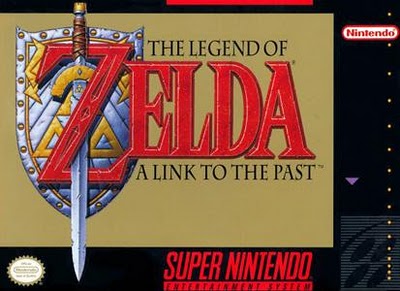 In the I-guess-this-is-an-annual-thing department, the game I am thankful for this year is The Legend of Zelda: A Link to the Past. Not that I've played it in years, or even thought about it much lately, but the only Super Nintendo Zelda entry is just one of those perfect gaming experiences that you can never quite escape, not that you would want to.
Last year I talked about Harvest Moon and before that a series of influential multiplayer games.
I remember the first time I played it, probably around 1994 at a cousin's house in Neenah, Wisconsin (which also happened to be the first place I ever played Super Mario Bros., but that was years earlier). They were far enough in the game that they could summon the little bird with the flute that could warp you around the map, which made exploration a bit easier, but obviously would have ruined part of the game experience if I had understood the logistics of the world a bit better. But luckily, my future exploration of Hyrule wasn't destroyed by this brief warp-around.
Read moreNovember 19, 2012 by Greg Noe
 It’s been a while since I played a Kairosoft game, not since May with the extremely lackluster Epic Astro Story. It’s easy to say it’s that game that put me off for another six months, but the Kairosoft formula as a whole can really drag on a gamer after a half dozen games.
But Dungeon Village was on super sale at the Google Play store, and it seems like it should be right up my alley: build up a Japanese RPG village which will house an inn full of heroes. Some of my earliest gaming experiences were with Dragon Warrior and Final Fantasy 1, the nostalgia of my youth was calling me to a game I could play on my phone in the bathroom.
Dungeon Village was released in March for Android and iOS, this review is for the Android version.
Read moreNovember 16, 2012 by Nate
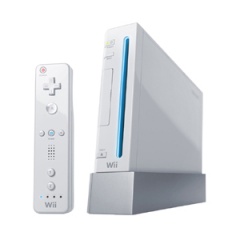 The Wii was a special console for me. Its lifespan coincided with a leisure sweetspot in my own life that afforded intoxicating levels of videogame opportunity. I played a lot of Wii games and tracked all the Wii developments, be they exciting or mundane, major or minor, captivating or frustrating. I found plenty of fun on my PS3, and I suffered the exclusivity of many X360 hits, but I don’t regret spending the majority of my gaming prime with Nintendo’s bold experiment.
Although many will say the Wii died long before 2012 (and not without merit), the system’s successor is a week away from taking the baton, signaling the official end of Wii’s journey. With that in mind, I thought it would be appropriate to take a week and remember just what Nintendo’s “Revolution” was all about. Each day this week, we’ll take a closer look at one aspect of the Wii’s legacy, framed by a number of Wii Truths that have dawned on me as I look back on the generation.
Wii Truths Week ends today, with the spotlight hovering over a handful of specific games that I found notable for some reason or another. Some of the games getting the spotlight are personal favorites, but this definitely isn’t a top ten list. After all, sometimes the most remarkable games are the failures that serve as cautionary examples.
And the truth is...
Read moreNovember 15, 2012 by Nate
The Wii was a special console for me. Its lifespan coincided with a leisure sweetspot in my own life that afforded intoxicating levels of videogame opportunity. I played a lot of Wii games and tracked all the Wii developments, be they exciting or mundane, major or minor, captivating or frustrating. I found plenty of fun on my PS3, and I suffered the exclusivity of many X360 hits, but I don’t regret spending the majority of my gaming prime with Nintendo’s bold experiment.
Although many will say the Wii died long before 2012 (and not without merit), the system’s successor is a week away from taking the baton, signaling the official end of Wii’s journey. With that in mind, I thought it would be appropriate to take a week and remember just what Nintendo’s “Revolution” was all about. Each day this week, we’ll take a closer look at one aspect of the Wii’s legacy, framed by a number of Wii Truths that have dawned on me as I look back on the generation.
Day four continues our software examination, now with a focus on Nintendo’s first major foray into digital distribution. Nintendo never mass-advertised Wii's online capabilities: neither the Virtual Console library of classic games nor WiiWare’s original software lineup received much attention. The marketing message was motion and Mario; lots of Wii owners still have no idea that their system can pluck videogames right from the ether.
But the truth is...
Read moreNovember 14, 2012 by Nate
The Wii was a special console for me. Its lifespan coincided with a leisure sweetspot in my own life that afforded intoxicating levels of videogame opportunity. I played a lot of Wii games and tracked all the Wii developments, be they exciting or mundane, major or minor, captivating or frustrating. I found plenty of fun on my PS3, and I suffered the exclusivity of many X360 hits, but I don’t regret spending the majority of my gaming prime with Nintendo’s bold experiment.
Although many will say the Wii died long before 2012 (and not without merit), the system’s successor is a week away from taking the baton, signaling the official end of Wii’s journey. With that in mind, I thought it would be appropriate to take a week and remember just what Nintendo’s “Revolution” was all about. Each day this week, we’ll take a closer look at one aspect of the Wii’s legacy, framed by a number of Wii Truths that have dawned on me as I look back on the generation.
The first two days of Wii Truths Week focused on the hardware; from now on, it’s all about the software. Day three begins that trend with a broad look at the Wii’s library, examining how Wii’s unique market position influenced the software that developers made for it. Following Wii Sports’ example, a lot of developers decided that Wii was best suited for collections of short, simple experiences. The plethora of minigame compilations became the butt of jokes shared among the core gaming crowd.
But the truth is...
Read moreNovember 13, 2012 by Nate
The Wii was a special console for me. Its lifespan coincided with a leisure sweetspot in my own life that afforded intoxicating levels of videogame opportunity. I played a lot of Wii games and tracked all the Wii developments, be they exciting or mundane, major or minor, captivating or frustrating. I found plenty of fun on my PS3, and I suffered the exclusivity of many X360 hits, but I don’t regret spending the majority of my gaming prime with Nintendo’s bold experiment.
Although many will say the Wii died long before 2012 (and not without merit), the system’s successor is a week away from taking the baton, signaling the official end of Wii’s journey. With that in mind, I thought it would be appropriate to take a week and remember just what Nintendo’s “Revolution” was all about. Each day this week, we’ll take a closer look at one aspect of the Wii’s legacy, framed by a number of Wii Truths that have dawned on me as I look back on the generation.
Yesterday we checked the facts of the little white wonder’s disruptive controller; we take a look at the rest of the system’s features on day two. Wii was no stranger to big ideas, despite its modest guts. And it always dared to take on new challenges, seeming to find gold mine after gold mine with Wii Sports, Mario Kart Wii, Wii Fit, and more.
But the truth is...
Read moreNovember 12, 2012 by Nate
The Wii was a special console for me. Its lifespan coincided with a leisure sweetspot in my own life that afforded intoxicating levels of videogame opportunity. I played a lot of Wii games and tracked all the Wii developments, be they exciting or mundane, major or minor, captivating or frustrating. I found plenty of fun on my PS3, and I suffered the exclusivity of many X360 hits, but I don’t regret spending the majority of my gaming prime with Nintendo’s bold experiment.
Although many will say the Wii died long before 2012 (and not without merit), the system’s successor is a week away from taking the baton, signaling the official end of Wii’s journey. With that in mind, I thought it would be appropriate to take a week and remember just what Nintendo’s “Revolution” was all about. Each day this week, we’ll take a closer look at one aspect of the Wii’s legacy, framed by a number of Wii Truths that have dawned on me as I look back on the generation.
First up, the Wii’s major selling point: its motion controls. The entire Wii marketing blitz revolved around the system’s intuitive, kinetic play style. Thanks to Nintendo’s expanded market view, which even made Wii a hit in retirement communities, the system flew off shelves faster than it could be stocked for the first year of its life. It was all thanks to an inviting white remote that effortlessly transformed into a tennis racquet, a bowling ball, and a golf club.
But the truth is...
Read more