October 15, 2012 by Nate
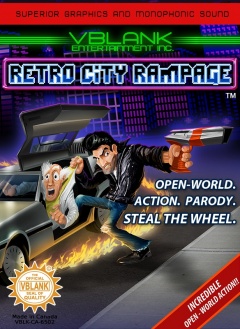 Ladies and gentlemen, we are experiencing a full-blown Easter Egg epidemic. In just the last month, Dishonored re-enacted a scene from PC classic Thief: The Dark Project. The newest World of Warcraft expansion contains homages to everything from Battletoads to Harvest Moon to Star Fox.
There are even veritable egg trails: Torchlight II pays homage to Borderlands 2 which references Dark Souls. If this trend continues, it won’t be long until we have a Six Degrees of Kevin Bacon on our hands, counting references back to either “Cake is a lie” or “Arrow in the knee.”
And Retro City Rampage isn’t helping matters. Released last week on PlayStation Network and Steam (and coming soon for XBLA and WiiWare), this Grand Theft Auto “demake” touches on dozens of classic NES-era videogames, if not hundreds. The launch trailer alone portends a never-ending assault of sly winks, like a pirate blinking War and Peace in morse code.
Read moreOctober 12, 2012 by Tyler Smith
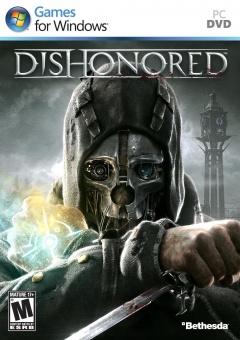 Dishonored, the new property published by Bethesda (The Elder Scrolls; Fallout) and developed by Arkane Studios (Dark Mesiah; Bioshock 2), is a brave and original story looking to enter into a decaying console cycle – the time when the sequel and spinoff reign supreme. It has to be said, the sights are firm and the course is true; Dishonored is looking to contend for Game of the Year status – and so it should. Arkane Studios has talent from across the globe, and a laundry list of prior experience. From Bioshock to Half-Life 2 to Deus Ex, and many more, Arkane’s capability holds great repute.
Dishonored sets off to be the spiritual successor to the very franchises that inspired it and you would be hard-pressed to find a reason why it does not fit the bill. At its core, Dishonored is a first-person stealth action game. You are able to sneak around quietly, hit confrontation head-on, or some other combination of the two. The level of freedom here is something that would make any long-time Deus Ex fan smile. It’s not just about the gameplay, though – the level of presentation on display is top notch.
Before getting into the review-proper, I want to touch on the design and visual presentation; its uniqueness begs prying eyes to observe. Dunwall, the city setting in Dishonored, is designed by the very same man who imagined City 17 in Half-Life 2. Visually, I get the sensation that Arkane started with something relatively gritty, and then moved the entire art-style in the direction of pastel and caricature. It’s just utterly dripping with style and brave design choices. The character design in particular is especially reminiscent of old political cartoon artwork, with all the exaggerated features necessary to convey a character without words.
Now, it’s not all sunshine and roses when it comes to the presentation. There are elements of the game that feel somewhat dated. While the character design is a pure joy of originality, the animations leave something to be desired. I’m never left with the sensation that these are alive, even for a moment. There’s also not much in the way of post-effects being leveraged. You have god-rays, dynamic shadows, and that’s about it. And while the artwork is incredibly balanced and fitting to itself, I found myself reaching for my video card’s anti-aliasing controls in short order just to get everything to sit better with the art style. Neither the MLAA or FXAA solutions quite cut it – the jaggies on display just detracted from the pastel effect.
Read moreOctober 10, 2012 by Greg Noe, Steve
 If you were born in the 1980s, you may have grown up like us playing The Oregon Trail, Number Munchers, and Where in the World is Carmen Sandiego? in school. Educational games disguised as entertainment were probably some of the most effective forms of lazy teaching. Personally, The Oregon Trail and Carmen Sandiego improved my geography knowledge and sparked an interest in history, and Number Munchers obviously helped my mathematical skills. Whether I wanted to or not, I was still learning, even in the computer lab.
But I have no idea what kids do or play now in computer labs. Probably check their Facebook or Twitter, maybe play some flash games, but I doubt most of it has an ounce of educational value. But maybe a game like Fate of the World has found its way into some programs, I know for a fact that Positech Games has landed deals with some institutions to deliver their Democracy series to students, so it's not unlikely a climate change/general-bad-things-are-happening-everywhere simulator could be being played in high schools right now.
It's been a while since our last Indie Impression, but it's a column I'd really like to continue. Independently developed games are becoming more and more important with every year, Steam update, and console release. Highlighting one or two a month shouldn't be difficult, and I believe important to the industry. Let's take a look at Fate of the World, today.
Read moreOctober 08, 2012 by Nate
 After playing Rayman Origins earlier this year, I was eager for more Rayman run-and-jump. Not long afterwards, Rayman Legends details started leaking out at E3, and the salivating began. Unfortunately for me, Legends looks to be a Wii U exclusive, and I'll probably have to miss out on Wii U at launch.
So I'll probably have to wait a while for the next big Rayman platforming adventure. But Rayman Jungle Run on my Android phone is a decent consolation prize.
In brief, it's the aesthetics and mechanics of Rayman Origins applied to Canabalt-style auto-running. Rayman charges through gorgeous hand-drawn environments, racing towards the goal and collecting Lums in thirty second stages. Its smartphone-simple design means Jungle Run sacrifices some of the creativity, variety, and exploration of Origins, but it's got a few advantages of its own.
Read moreOctober 03, 2012 by Greg Noe
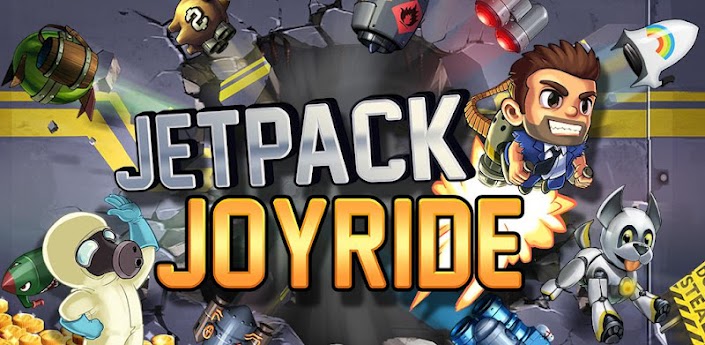 I read a complaint recently that most Android and iOS action games are just glorified quick time events, touching the screen at the right time to jump or fly or shoot. This is almost certainly true for a game like Temple Run, where your character auto-runs and you quickly flick the screen to react to obstacles and collect more coins. The same could probably also be said for Jetpack Joyride, where the game’s single input turns your character’s jetpack on, releasing turns it off. To some people, this isn’t compelling gaming at all, and I understand that, but for whatever reason, I get hooked on these little games with simple short term objectives but no real long term goals.
What do you do in Jetpack Joyride? Fly as far as you can? Yeah, I guess that’s maybe the point. Collect coins to buy more things? That’s always fun, sure. Complete objectives and achievements? Sometimes a nice diversion, okay. Now that you’ve done all those things for hours, are you any closer to “beating” the game? Probably not.
Someone more pessimistic than me may suggest the real point of the game is to bewitch you with expensive in-game upgrades to trick you into spending real money on fake coins to make a tidy profit. This is certainly a possibility, heck, app development usually isn’t very altruistic, but if I can have a fun without spending money, have I beaten the system, or simply enjoyed a video game?
Read moreOctober 01, 2012 by Greg Noe
 As the first Monkey Island game in nine years, fans had high expectations for Tales of Monkey Island. Not only is the series one of those coveted, highly nostalgialized, fan favorites from our youth, but the last game, Escape from Monkey Island, simply wasn’t that good. There were a lot of questions whether Guybrush Threepwood is even funny in three dimensions as it had been tried and failed once already.
I certainly had my doubts, I had never played an episodic game before Tales of Monkey Island, so even the delivery method was questionable. I know that TellTale Games has had great success with season gaming, but would it work with Monkey Island? Would the episodes be too long? Too short? Too reliant on cliffhangers? Could a writing staff still capture Guybrush, Elaine, and Chuck?
Five episodes later, I have my definitive answer to all of these questions. Rise of the Pirate God serves as not only the finale for the season, but once again, could be the final chapter in Monkey Island’s 20 year history. Let’s talk first about the episode, and then the series as a whole.
Read moreSeptember 28, 2012 by Nate
 There’s a narrow alley tucked into a corner of the industrial castle town, hidden behind the bustling Arena Square. Armorsmiths and swordcrafts crowd the path, talking shop and hawking wares to passersby in a gaunt corridor of tiny workrooms. In the alley’s only empty corner, a lean brute presses an elderly shopkeep against the grimy concrete and slyly demands a cut of profit.
It’s a place foul with sweat and industry. It swelters with forge and struggle. A stroll from end to end offers a glimpse of the desperation that is life for these lower class tradesman. They fight for survival, crammed into a corner of the last thriving city on the last prospering island in a rotting world.
The locals call this slum strip Artisan’s Way. It has an effortless narrative density that's so refreshing to see in a JRPG. The Last Story could have been about this place. It’s not. The Last Story is about a vampiric meteor that shoots giant lasers.
Read moreSeptember 26, 2012 by Greg Noe
 Saints Row 2 was already over the top. After an epic prison bust you then shoot up a courthouse and spray poop on rich people’s homes. It was crazy and pretty fun, and seemed worth playing beyond the first hour just to see what the developers could cook up.
Volition wanted to go bigger though, so they made Saints Row: The Third. Within days of release, the game was already famous for one of its weapons: The Penetrator, a giant purple dildo with realistic... dildo physics. But from my time with the game, I can promise you they really went to town with an adrenaline-pumping, action set-piece heavy first hour that simply blows the offerings Saints Row 2 put up.
So let’s take a look at the first hour of Saints Row: The Third, with this hour’s minute by minute section being sponsored by the absurdity of Volition, highlighting the crazy levels the game goes beyond even its predecessor.
Read moreSeptember 24, 2012 by Greg Noe
After the excellent Lair of the Leviathan episode, I was totally expecting the quality to fall in back to Tales of Monkey Island’s previous levels, good comedy, but not Monkey Island comedy. Thankfully, The Trial and Execution of Guybrush Threepwood manages to sustain most of the momentum of Leviathan in a well written romp that sets out a few pretty unique puzzles for our hero.
So far I’ve really been enjoying Tales of Monkey Island, it isn’t as good as the first three games in the series, but is really well done as an episodic adventure. Breaking out the island hopping into their own chapter has always fit well with Monkey Island, and allows the writers to create more natural cliffhangers and mini-conclusions.
The Trial and Execution of Guybrush Threepwood features a few of its own surprises, which I’ll definitely spoil in the following few paragraphs, if you’re reading this far I guess I’m assuming you’ve either already played the season or don’t care about spoilers at this point.
Read moreSeptember 21, 2012 by Mike in Omaha
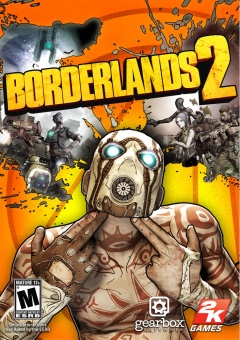 The original Borderlands was a breakout hit for Gearbox Software in 2009. The cel-shaded mission-driven FPS-meets-Diablo-style super-hyphenated lootfest was a quirky and endearing departure from more serious franchises like Halo, Call of Duty, and Medal of Honor. Instead of pushing the same "OMG 40 modes of multiplayer!" angle that had gotten so popular, it chose to design around the concept of 4 player co-op gameplay. And it did so with relish.
With the success of Borderlands, Gearbox was able to move beyond porting other studios games and their now languishing Brothers in Arms property. Instead of working on others titles, they had a verifiable sales behemoth of their own making. But with great power comes great responsibility. Games like Borderlands often struggle because harried gamers don't give them a chance. In a retail sea awash with sequels and spinoffs, new IPs often struggle to gain traction. Because of this, those gamers who do latch onto a new piece of software, often feel entitled. Afterall, they took a chance on an unknown, thus contributing to its success. These types of fans are a double edged sword. They are often some of the most vocal in supporting a game and getting the word out. But they are also frequently among the hardest to please with sequels, as the developers try to thread the needle of offering new and interesting content, while staying true to the experience of earlier games.
This is the environment that Gearbox developed Borderlands in. How does one replicate the success of a game whose popularity was so driven by its quirky uniqueness? In other words, how does one make a game that is the same, but still unique? If I had the answer... if anyone had the answer, they would most likely be very rich. It's a moving target. The question is whether Gearbox is as accurate at hitting that target as some of the guns they designed for the game. And if they are, can they relay that fact to a gamer in the first 60 minutes? Let's take a look at Borderlands 2 and find out.
Read more